QRIAP #17
…exploring the liminal spaces of Zion




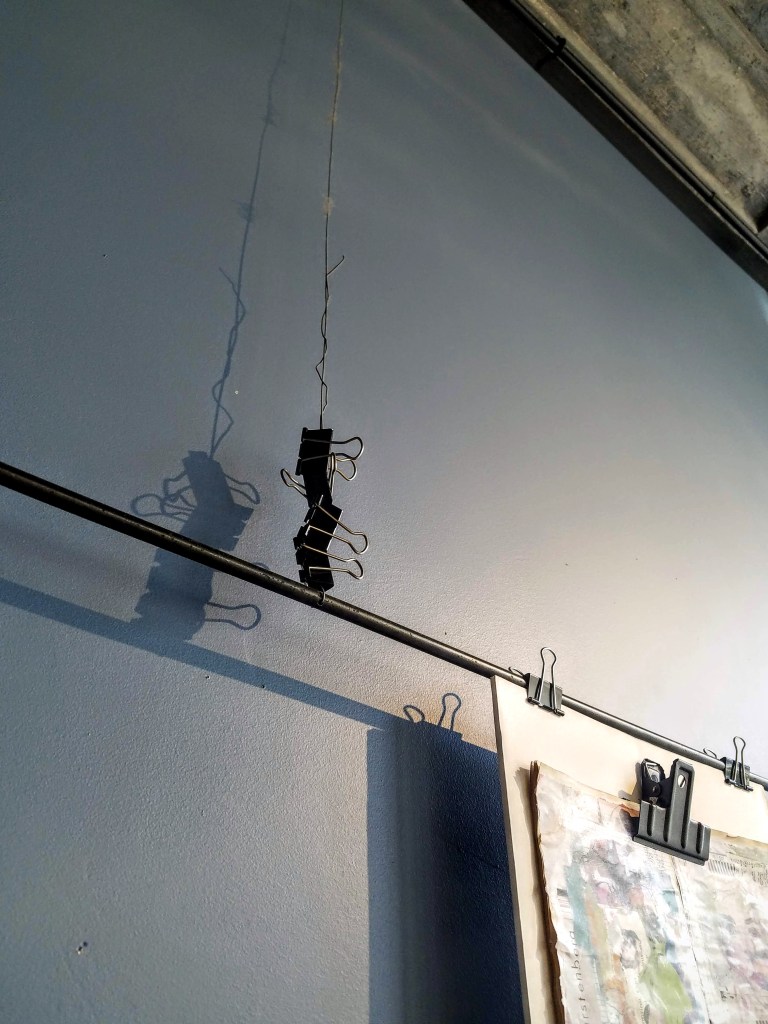

Oh, my sweet Zion people. How you must be grieving.
Here you are, having outlasted a wildfire, two mudslides, and now a political tsunami has consumed your sense of safety and wellbeing. One of yours shot a man who is now hailed a martyr, and now someone has murdered five of your people before burning a church to the ground.
What do you do when all is not well?


Kat Nadi-Duma moved to Provo in their early twenties to give support to a young woman they were dating who was a student at BYU. With encouragement from their partner, they joined the LDS church after having been raised Irish Catholic by a grandmother. The influence of paganism in Irish Catholicism was a natural bridge between Christianity and their more universal sense of god once they left Mormonism. The family describes themselves as mixed faith, practicing various forms of paganism—Irish, Welsh, Nordic, Hellenocentric— as well as a largely skeptical daughter who’s studying Shinto.
“We all cherry pick from each other,” Kat says. “But all of these faiths hold Yule very sacred. We are a very religious family. But whether you call it religious or spiritual depends on which one of the kids you ask. For me it often depends on the day. I know why we’re doing the ceremonies the way that we do, and why we organize the night the way we do, but also we do it because it’s something we do as a family. It’s a tradition, something we look forward to.”
Wade, Kat’s partner says, “For me it’s mostly about connection with nature, about how we are part of nature. I would say it’s more spiritual as far as a day-to-day acceptance of where you fall in the universe than it is religious. There’s nothing I can do that raises me above nature in any way. You don’t have to work at it, you’re part of it, and all you have to do is be that part and accept that you’re part of it or above it, but exactly the same.”
Kat refers to themself as a dharma pagan. “I’m a Buddhist reverend—I do all the things. But the concept of pantheism, the Spinoza-style pantheism, fits with the dharma. In the dharma this is all an illusion. We don’t know what reality is because we don’t experience it; not a phenomenological reality. We can’t. We can perceive, but no one is going to perceive the world, the things in our environment, the same way that I do. It’s almost magical, and by magical I mean awe-inspiring—something is happening that we don’t access. Like, I can’t point to it, but it’s right there. We’re exchanging things on a quantum level—with this, and that, the dog, and each other. We know that it’s real, but we can’t see it.”
In the tactile experience, Kat says, nothing ever touches. “There’s always a half-way, and our brain is filling in the difference. That’s where my faith lies; that’s where my religion is. Do I understand it? Fuck no. But at the same time I could talk about it for days”.
“Mind is so amazing! And consciousness—we can’t even describe what that is. We cannot put consciousness on a slide. We cannot know the inside of someone else’s mind; it is a different universe.
I do believe that there is a consciousness that we don’t access. We know about mycelium, the way it travels under the ground, and that it has electrical activity that is incredibly similar to neurological chemical activity. So there is a mind in mycelium by the way that we understand a mind. But then when we incorporate that with how we understand our biosphere—in the way we know consciousness—there is a real possibility that our earth has consciousness.
We know physics are real, and then there’s the dual light experiment. We don’t understand the nature of light. Is it a particle or is it a wave? We have learned that depending on whether or not we observe it changes its nature. If we set up the experiment and we leave, the light behaves as a wave. But if we stay in the room, the light behaves as a particle. That means there’s no matter, and it means that it’s moving with a gravitational force that we don’t experience because it’s on a different cosmic layer of gravity. Steven Hawkings talks about gravity as a rubber sheet, and that the earth sits on the sheet like a heavy marble. So, if this is gravity as we experience it, and earth is that heavy marble, then light that’s moving as a wave is not beholden to gravity because it doesn’t have material. But the second we observe it, light becomes a particle, and that does have material. So there’s something happening on a quantum level.”
Light, Kat says, changes under observation from a wave that has no matter into particulate matter. “If we think of brainwaves from the standpoint of neurons and whatnot that we see in mycelium, well what’s to say that that consciousness isn’t something we can communicate with, or, in fact, transmute into?”
Through our consciousness, Kat says, we create the particles themselves.
“When we talk about the Buddhist concept, the cosmic idea of the bardo. It’s the layer between the layers. When you’re looking at a filmstrip, and whatever the fuck those black lines are, that’s the bardo. We don’t know how big it is, how material it is, but we do know from a Buddhist understanding that we pass through it between our incarnations. So what are we passing through? I don’t know, but it’s going to be cool.”
Kat says that’s where their magical practice lies, with the idea that a person can manipulate the world through conscious thought. “I don’t know that I believe in any of that shit where I’ve got to manifest it and bring magic to me, but I do know that when I interact and communicate with my dogs, there’s real communication there. When I go stand barefoot in the woods, there’s communication there.
“We have an altar that we interact with—the deity figures, Pan and Gia, their offering cups, and lots of natural things. We’ve always encouraged our kids to put their own shit up.”
On the shelf, Kat displays ocean sand, honey collected by their family, salt from the Salt Flats, and a jar of water from the river where their great grandma, a midwife, did deliveries. “We have soil from Wade’s father’s grave, and a pomegranate that we dried out for our daughter’s wedding.”
The altar nourishes the inner child, and encourages wonder. Kat read books on pagan practices, but decided to go rogue with what to incorporate. “I thought, well, that doesn’t make any sense. If we believe that deities live in everything, why would I feel weird about whether or not somebody built or made the perfect version of an altar? I don’t need to know why something is so special, but when I touch it I know that it is. We have a stick—it’s from Oregon. I don’t know what we were doing, I’m pretty sure I was stoned out of my gourd, and this stick became important in my heart. It was the “right” stick.” If you hold it like it’s a wand. I tell you, it feels great. It’s a good stick.”
They heft the bronze statue of Gia, which Kat says they found the figure on Amazon. “I find all sorts of shit in all kinds of different places. I tried having something else up, and it just wasn’t working. I saw her, and I was like, that’s it! That’s what a mother looks like. She’s just hanging out, crisscross applesauce, gives no fucks. I love it. Check out her hair. I’m all about symbols and signs, and there are pieces of different kinds of animals in there, sticks, shells. She’s covered in animals. There is a plesiosaur, an acorn. There’s a turtle here, and a whale going across there. Dolphins and an elephant. Her breast has all kinds of flowers on it, and mushrooms. Down her arms, it’s not tattooing, it’s the natural world.”
If the year were a day, Kat says,Yule is the middle of the night. Family and friends gather at eight o’clock in the evening. The house is usually open to anybody who wants to come. This year it’s closed.
“This is our grandbaby, Finn’s, first Yule. Our son, Talon, Finn’s father, is Norse pagan. There’s a naming ritual that has to be done, and he wants to do that privately, which we understand.”
Depending of the demands of life, the family tries to celebrate on the actual event—December 21st. Preparation begins weeks in advance. Kat makes gifts of mincemeat for family and friends. In past years they’ve also crocheted items, but this year they bottled kahlua.
“The last few years I’ve wanted to do something we could all make together. With the kahlua, I had all the kids come over, and I taught them how to make it. We bottled the first couple of bottles together. Then it’s about all of us, and the sense of passing it forward.”
Kat requires that individual family members write a letter to each of the others. “The only rule is that it has to be true, and it has to be kind.”cAs guests arrive letters get tucked into each other’s things until after the bonfire. The family plays games until midnight, while eating bowls of chili and drinking cider.
“When our kids were little, it was virgin cider because they didn’t drink. Now that they’re older it’s a different energy, and half a gallon of fireball goes into the pot, and everybody enjoys it. Everyone throws in their own spices, their own stuff.”
Celebrants build a bonfire. The Yule log is the first to go in, in a ritual of dedication. It’s carefully chosen a couple of weeks prior to the ritual, and affixed with magical items contributed by each of Kat’s family members.
“Before the fire, we’re doing fun things that are high energy. On the first side of the fire we gather and throw in shit in that doesn’t serve us anymore, burning it to ash. but we all share what it is that we’re burning to the ground. Then we sit around the fire, and we talk; we all share what it is that we’re burning to the ground.
“We have the first part of the fire, which is throwing shit in that doesn’t serve us anymore. Burning it to ash; everything goes down to ash on the first side of it. Then we sit around the fire, and we talk; we have these little gratitude things, and it’s like shooting the shit around the fire, but we all share what it is that we’re burning to the ground; throwing in shit that doesn’t serve us anymore—burning it to ash. Everything goes down to ash, and everyone blows it away. Good riddance, you know? You curse that thing you just threw in the fire. Fuck off!—that thing that you just through in the fire. Sometimes it’s a bad habit, or things we’ve done that really wounded somebody. The thought is, I’m letting go of the thing that created this, that behavior. Sometimes you write it out, sometimes you make something to throw in.”
Next, participants throw salt and spices in the flames, turning it different colors, cleansing the fire in a ritual of transformation. Next, family members toss in private wishes on a piece of paper.
“You put in your things that you’re hoping to do in the coming year. It is a little bit about manifestation. You’re burning it in the fire, and it’s lifting it up in the smoke. It’s kind of like that transmutation we talk about. You’re trying to release the positive, and the purpose, and have that float out into the world, being lifted up on the smoke, and the flames, and the heat. The fire isn’t bad or good; it’s a transformative vehicle. The ritual is about transformation and change— creative fire vs. destructive fire. We participate on both sides, because that’s the balance of it; you can’t just have the one.”
Afterward, the candy comes out—the cookies, the mince, fudge, and pies. Kat’s family has a long-standing tradition of watching the movie “The Hogfather,” and reading ghost stories, and telling funny tales of family members who have passed. Celebrants exchange gifts of books, and play Yule games—some of them dating back thousands of years. Cards Against Humanity has been popular the last couple of years, Kat says.
“There’s nothing like being filthy as hell at six in the morning.”
Post-fire, Kat says, the energy is solemn. The letter reading is on the backside. “People start finding quiet time. The babies are falling asleep, and the older people are crawling into their letters and their thoughts. We read them privately in different rooms, all of us just sitting around reading, often crying.”
While the children go to sleep, the older family members stay up all night, waiting for the sunrise. Kat says it’s about meeting the dawn.
“Yule reminds us why we like being tight as a family. Yule helps tighten it up even more. There’s been more than one year that some air has been cleared; the airing of grievances. We unite over Yule.”
I think what I’m most grateful for is freedom from addictions. It’s been a few months since I smoked my last cigarette and marijuana. Harder drugs, it’s been years. More specifically I’m free from the mental habit of addiction, from thirst; that thing that drives you to negativity and senseless activity, whether standing on your feet all night long walking around looking for a cigarette. It amounts to the same thing; purposeless engagement.
It’s going to sound cheesy, and I’m sure you can see it coming. But specifically, I’m grateful for Jesus Christ, and how that’s helped me overcome addictions; but that’s not really much of an explanation. When you study the gospel it tells you how to have purpose. It tells you to take care of others, how to serve others, and not look after your own needs. God and other people will take care of my needs as I serve other people.
I do take care of myself, but my goal isn’t to satisfy my pleasures. My goal is to develop beyond my wants and satisfying myself. My goal is toward the next life. When I think about my addictive behavior, I ask myself, “Is that something I could consecrate? Is it something that makes me healthy, or somehow stronger, or am I just making excuses continually? How does this compare to Christ agonizing on the cross as far as my suffering goes when I withdraw?”
That’s part A. Part B is this: When you empty your mind, when you find those moments where you’re not questing after something—needing your next hit—whatever it is, there can be a peace inside of you. Think of your ordinary internal dialogue. You might be worrying away about your grades, or what people might be thinking about you, or you might be thinking where your next cigarette is going to come from—that’s been mine for many years; but in the absence of that, that’s where the voice of the Lord comes, where that peace resides, where revelation happens. When I’m not thirsty for the next thing, I’m peaceful; not worried or afraid, not questing after. Many of us get addicted to fear, addicted to worry. We get addicted to the internal thought processes that I’ve described. Certainly, that emptiness of mind, that’s where you find the peace of being. You’re well-fed, you’re warm, you’re not thirsty, physically speaking. Why be upset in the moment?
Jesus embodies that faith. He assures us that God will provide for things as they arise. It’s like Buddhism essentially; emptying the self, becoming self-less. What can you become when you’re selfless? What can you let come in? I think about Buddhism and the concept of nirvana, itself. Say when they draft you into the military, you can become a conscientious objector. Trying to attain nirvana is becoming a conscientious objector in the cosmic war between the Lord and Satan, if you like. Your soul can in actualize—I don’t know the metaphysics of it—but once you empty yourself, you can see what’s out there. What’s my radio picking up from around me? Whether it’s the thoughts of other people, or something bigger—the collective consciousness, whether it’s angels and demons, or whether it’s the lord himself—that’s something you can attune to.
I started the quest so to speak with the idea that maybe everything is true. Maybe all the gods are true. But through the yearning for the spirit, I came to the conclusion that what I found is truer. I started out not believing in God and Jesus Christ. But I started asking what’s real. Is it the feeling in the heart, in the gut, the coincidences that happen around me, be it bad luck or good luck?
The hard part is not being judgmental. Whenever I take a step forward, it’s easy to judge where I was standing before. It makes me a little bit sad. It’s never comfortable. For years on the street I was kind of an adolescent; I couldn’t take care of myself, I needed someone to take care of me. I need to not stand in judgment of that now. I’m grappling with that right now. It never ends.
I have shelter on a piece of property where I have permission to stay. It’s something I hope to get through eventually, and hopefully get off the street. It not like I have to find a reason to be happy. I stay warm, it’s a little bit damp in my shelter, but all things considered I stay warm. It’s good. If I can take care of myself, I do. I’m trying to be self-sufficient. I don’t come around the Food & Care Coalition as often as I used to. The people who work here are delightful, their breakfast hash is delicious—but often the other clients don’t like my example. I love my street family, but I want to be free of my bad habits. It’s a downside of creating a community on the streets if we mutually reinforce our bad habits. That’s why I admire self-sufficiency. You are isolating yourself from corrupting influences, and seeing what’s up with you.
People are things that I love. If I have a couple extra packets of oatmeal, I’ll give it to you if you want it. It’s the vagabond’s code. If I’ve got it and you need it, we can share. The beauty of being deep in the cup of the Lord and being alive with the Holy Spirit is that we create a nourishing presence. I can imagine what it must have been like to be around Jesus Christ or the Buddha. When people are ill, we feel ill. And when people are happy, we feel happy. When someone is thirsty, or fearful we can feel that too. And when people are peaceful, you feel that.


“Everything you need to know to live on the street you learn in kindergarten. You learn your manners; your “please,” “thank you,” and “you’re welcome.” You learn ABCs, 1-2-3s, and look both ways before you cross the street. Don’t get in the van because there’s never candy, there’s never a lost puppy. You learn caring, sharing, and politeness If you don’t have anything nice to say, don’t say anything at all. That’s pretty much it.”
Leandra King has lived on the street in Provo for the past four months, faced with significant health challenges: PTSD, a personality disorder, atrial fibulations; intestinal bacteria that causes reflux, nausea and constant abdominal pain; premature menopause; schizophrenia; ADHD. The medications to treat these issues are incompatible. She is the mother of four kids—ages 24, 19, 17, and 12—and a 2 ½-year-old grandson. She’s been through rehab, and while she admits that she still drinks, she’s off drugs. Wasatch Behavioral Health is handling the case to get her off the street.
Leandra’s story is fraught with hardship, but she stays positive. “I’m trying to bring the good souls together on the street.”
It’s not uncommon for the homeless to experience violence, and Leandra is no exception. Provo Police Department looks out for her, she says.
“As long as they see you’re doing good, and because I’m not smoking a crack pipe or doing drugs, they make sure I’m okay. A guy knocked me out last week. I ran away and hid on a ledge under the bridge. At night the cops came to check on me. They said, “Leandra, you’re trespassing. But if it takes 5 or 6 hours to clear out, we understand. But technically it’s trespassing, so be sure you don’t come back.””
At night she sleeps in inconspicuous spots on the street, or under a tree at the Provo City Temple, where she says she isn’t hassled. “I have this amazing body blanket and another blanket that I wrap around me. I double up my clothes, and I have a sleeping bag. And today this nice lady gave me a jacket.”
On the day prior to Thanksgiving she reached out to her family living in Highland. “I called my family today, but they shut me down. My mom said people wouldn’t appreciate me being there.”
To explain why her family chooses to turn her away she says, “I have a story. I’ve lived twelve lives. There’s so many things I’ve seen and done, both good and bad.”
When she was eleven, Leandra’s father, who was a first counselor in the family’s LDS ward bishopric, came out as an atheist and left the church.
“I started drinking then. I was a daddy’s girl, and he left us.”
Leandra has five sisters and a brother. She quickly became responsible for her younger siblings. “I raised my youngest sister because my mom got remarried to this guy, and they were fighting all the time. She called me mom. I dropped out of eighth grade. [My mom and step-dad] had me stay home from school to watch he instead of getting a babysitter. They were always fighting, and the cops were always at our house. My sister would sleep with me in my home because she was so scared.”
At fourteen, Leandra’s twenty-year-old boyfriend moved in with the family. A year later she was raped by another man, and at sixteen she found herself pregnant.
“My boyfriend left me when I found out. He said I was pregnant by the guy who raped me, even though the dates didn’t match up. I had my daughter and then he came back. We got married when I was seventeen, and I moved out of my mom’s house. My ex-husband ended up sleeping with my sister, and me and my daughter moved out of his place. I raised her alone for five years. I always worked. I worked with elderly people as a group manager at a group home. I was a personal trainer and a nutritionist.”
She and her daughter moved from place to place until Leandra became pregnant again with her second child, a son. At that point she and her children moved in with her sister. She continued to have problems with abusive men. One of them worked for a drug cartel, she says.
“I isolated myself, stayed with my mom for a while, and just shut myself away in my room.”
She met the next guy in Harriman.
“He immediately started pimping me out. He ended up being a gunslinger, making guns and selling them out to gangs.. I was there for a week, and then I took a job cleaning houses. This guy found out, thought I’d crossed him. He put a hit out on me, tried to tell me he owned me.”
She fled to St. George, but the gang followed her every move. “My family was scared because they were after me, and they’d killed two of my friends. They followed me. They knew every move I was making. I came back here and went to rehab.”
After that Leandra’s luck seemed to change.
”Four and a half years ago I started working out at the gym, and became a competitor in fitness modeling. I got sponsors and took second place at nationals. My main sponsorship was in Florida, so I left my kids here to finish school, and I moved there. I met a man and became jealous of all of the media attention I was getting and started threatening me. At the time I had a townhome in Vineyard. I was working for Nudge, making $1500 a day as a trainer, and competing as a fitness model. I had the world. I was going to move my kids to Florida, and then this guy became abusive. I woke up with broken bones and head trauma in a hospital ICU back here in Utah. I had to learn to walk again.”
Time and again, she found herself knocked down. “I don’t understand why I’m out here. I feel like my siblings are all so accomplished. I was established for a while. I thought I had it all, but now it’s like I’m the lowlife. After the abuse, I couldn’t take care of my kids. I lost everything. My family is mad at me living on the street. I’m always the problem child. I express opinions and they tell me I need therapy. They say, “Go talk to your therapist about it, we don’t need to hear it.” I have borderline personality disorder and PTSD due to severe trauma. I’ve been in therapy since I was 15-years-old. My sisters have problems too, but I guess I stand out—the squeaky wheel. I don’t get them.”
Today, Leandra is celebrating Thanksgiving with her street family at Food & Care Coality, where offers comfort, and her own belongings to those who don’t have as much as she does,
“Being out here makes me so much more grateful for life. I’m trying to just be a strong person, and show empathy. I’d do anything for anybody out here. There was this lady; I had a pair of socks, and she was cold, so I took off my socks and gave them to her because she needs it more than I do. I could probably go home anytime if I played the part, you know? And that poor girl probably couldn’t. I feel like I have to save people. My therapist here tells me, “Leanra, you have to save yourself first.” But I feel like I’m strong enough that I can do this for other people. It’s my calling. Every day I help out over at Community Action volunteer work. It’s good karma. I love helping people like that. It feels good.”
Even in the midst of her struggle she reflects on what she does have.
“I’m grateful for a lot. I’m grateful for my kids. I’m grateful for the love out here among the street people. I think a lot of us out here on the street are choice spirits. People who aren’t on the street forget to stop and smell the roses. You know what I mean? They don’t take time to look up at the sky at the beautiful clouds, the trees; they don’t appreciate that anymore. We don’t need that. There are some really, really good people who live out here, and I love being with them. I enjoy it. I’m grateful for the Coalition, my street family, and I’m grateful for the lady who gave me this jacket.”


Transgender man, Noah Barlow, moved to Provo with his family in 2010. He graduated from Timpview High School in 2015, and was accepted into Utah Valley University’s art program on full academic scholarship. He has plans to complete his BFA in illustration in 2023. His watercolor painting, Initiative, was created as a ritual act of self-discovery, and a meditation on gender that lead to his transition. The Prophet had the honor of interviewing him about his experience with gender identity at his home in South Provo for the 2022 Transgender Awareness Week. November 20th, Transgender Day of Remembrance, is observed annually in the United States to memorialize the trans persons lost to violence in the preceding year. To date, 32 deaths have been reported due to violence toward members of the transgender community in 2022. Many trans fatalities go unreported.
(20 minute read)
How old were you when you got in touch with the fact that you’re trans?
I was twenty-two in 2019, the year I came out. It wasn’t that long ago.
Prior to coming out, many trans people experience a sense of extreme discomfort—or dysphoria—due to a “mismatch” between their primary and secondary sex characteristics, and their gender identity. Did you?
At first I wasn’t sure if I felt entirely like a man, and even now I don’t know if I feel more one way than the other. It’s just more convenient to present in a masculine way. There was this feeling of discomfort being perceived the way I was “supposed” to be, so I was always self-conscious about how I could be an object of a sexualized gaze. I didn’t want people looking at me that way. I was uncomfortable with my breasts and my figure. I admit, sometimes I would lean into it and I’d dress in a certain way. I’d put on an outfit in the morning, and then go out and think, “Man! I wish I’d worn a higher cut t-shirt.” I knew people were going to be aware of my boobs.
Now, I can put something on and not even think about it. There is no pressure to occasionally dress up in a feminine way. While there are some days I should dress up cute, I generally wear whatever I want. I don’t have to worry about being uncomfortable once I leave the house. Anymore, I’m worried about being perceived as a threat or creepy or something, remembering what it was like to be in that feminine position, and feeling scrutinized by the men around you. Now I worry that I am causing people anxiety, specifically by women, by being around them.
You have a lot of trans friends. How does your relationship with your gender compare to theirs? Have you had discussions where you talk about the realization that maybe your gender assigned at birth wasn’t the right fit for you?
Yeah. I have several trans-masculine friends. I don’t really have any close trans-femme friends. I only really know about the trans-masculine, or non-binary experience. One of my friends in particular, they and I grew up together, and I forgot a lot about what it was like being a little kid until they started reminding me the ways we hung out and played together. We were a couple of weird little kids. There was something a little different about us that I didn’t notice until later. Something was off—I didn’t quite know what it was—it wasn’t just because we were transgender. I honestly think that being transgender is just one of many solutions for coping with feeling like there was something different about you.
I don’t know that gender is inherent, one way or another. It’s not like a cis person has to be cis forever. It’s not like some eternal, spiritual truth. But on the flip-side, the same goes for a trans person. It’s not like if I was born at another time and place, and another set of circumstances I would have been trans. I think it was largely circumstantial, which doesn’t make it any less valid. I feel like me and my friend started figuring things out at the same time, but independently of each other. I came out, and then I remember they commented, “You coming out has shown me I can be more open about my gender.” I think from there we’ve gone in different directions, where they’re non-binary and then I’m flat binary. Being non-binary is a lot more complicated; subversive almost. So we’d talk about what it means to be trans-masculine together, but at the same time their experience wasn’t the same as mine. I don’t really know what it’s like to be non-binary, but I do have those feelings sometimes. There’s obviously a material difference between me and cis men, but that doesn’t make me not a man, just a different kind of man. It’s funny looking back. We were both a couple of weird little girls together, and then we grew up, and we realized that those experiences, how we were when we were little, could have pointed toward where we eventually ended up. You could say we’ve seen this explosion of people coming out as trans men. I think it has a lot to do with our economic conditions and how people are coping with it. I don’t think that makes transgender any less valid, but I think we were both weird little kids that were stifled or choked by the requirements necessary to survive under our cultural and economic expectations. One way that we are able to cope or adapt was through gender. I don’t know if Sell would agree with me, but this is something I’ve been thinking about, and it’s probably a huge difference between me and other trans people. Conservatives will freak out over the “trans ideology” or the “trans agenda.” The way I think about it might be a little taboo, because I think trans-ness has a lot to do with our economic structure. There have always been trans people. What we would conceive as transgender has existed under different names for thousands of years, but I think the way it emerges now is highly specific to modernity. Other trans people might argue we’ve been here for thousands of years, but society is just paying attention to us now. Part of that is true, but I think capitalism is so stifling that it literally contorts people, like metamorphic rocks. It squeezes you until you fit a shape that’s more compatible with the system you live under.
It’s so dangerous and upsetting to be a woman, and it has been for centuries under a plethora of societal structures—but I think it’s particularly so now. I feel like a lot of the time that results in trans men. I feel like that’s the only thing some people can turn to. I’ve been thinking about it a lot lately. I don’t know; maybe I’ll change my mind later. I don’t want to make people mad. There are those that think that gender is some spiritual, transcendent thing, and I honestly feel like anyone could be any gender—even cis people. It’s just that under the circumstances, they happened to not need to make that adaptation.
How long after you came out did you start your medical transition?
I waited for a bit. I came out in April of 2019, and I started taking hormones in August 2019. Then I finally got surgery this year in February for a double mastectomy. I feel like other people usually start hormones before they come out, or just after, but it took me a while just because I’m distractible and I procrastinate a lot.
What was the reaction from your family?
It was pretty supportive. There are people it was hard for, maybe, and there might be family members who just haven’t voiced to me that they’re not okay with it, but people are generally good at keeping their opinions to themselves most of the time. My paternal grandma was kind of goofy about it in her older generational way. She didn’t outright reject me. She was really sweet, but she treated my coming out like I was a little psycho or something. She’d say stuff like, “I know you’re having this psychotic moment right now, but just know that I’ll always love you.” That sort of thing. And I was like, Thanks Grandma. It’s been a few years, and I think she’s either come around, or been lectured by my aunts. One aunt told me, “I sat down and had a talk with grandma, so she better be nice to you, or else.“ And she was nice to me; she just thought I was having a mental break or something. At least that’s how it felt. After a while she was eventually, “You’re my grandson.”
On my maternal side, my grandma is so out of touch with how to be a decent human being that she couldn’t even have a proper reaction to having a grandchild coming out. I feel like she’d realize that times are changing, and she couldn’t react the horrible way that she did when [my mom] came out at bisexual. I thought she wouldn’t have that same reaction with her grandkids, but it was pretty much the same. She took it as a spiritual challenge for herself. She’s very good about making anything about herself or twisting it into how it relates to her spiritual journey, or a test of her faith. [My great-grandparents] have a family newsletter, and as far as I know she’s always said bad stuff about my mom and our family in it, ever since the newsletter got started. After I came out, my grandma wrote, “My granddaughter wants to be a man, and I know that gender is an eternal truth. Even though she will always be a beautiful daughter of God, I will call her Noah.” I thought, alright. It’s a little weird to call a girl Noah, just go one way or the other. just outright reject me. It was really weird. The halfway crap made me want to talk to her even less. The waffling made me feel even less safe. If she’d just been outright, “I don’t accept you,” that’s a straight answer. But her being middle-ground about it, I thought, “This is a snake. She’s a snake.” She didn’t tell me that she was going to out me to the entire extended family, whom I didn’t talk to myself. At first I didn’t care about it, because I’m generally at a baseline pretty chill about things. But later on, a year or two later, it started getting to me, and I thought, you know, that’s actually kind of fucked. I actually don’t want to talk to my grandma anymore. I blocked her on everything, and really nothing of value was lost. I didn’t talk to her anyway because she’s a bad person in the first place, and I don’t care for her family. They all have the same ideology. Like I said, I don’t think gender is an eternal truth. I think anybody could be any gender, and decent people would accept them, however a person needed to be in that moment. I subscribe to the fluidity of gender and sex.
My parents were great, though. I was significantly luckier than most trans people in terms of coming out to family. It had been a conversation I’d been having with my mom for a long time. At first I was thinking, I’m non-binary or something. I knew I wasn’t a girl, but I don’t know if I was completely male either. I just didn’t like being seen as a woman. The word “woman,” referred to me, makes me cringe. No, I’m not. There’s such a gravity to the word. I feel like you really have to know who you are to say you’re a woman, but I guess calling myself a man has a lot of gravity too. I think that’s because whenever I hear people talking about men it’s often in a negative way.
But you feel more comfortable with that?
Yeah, or saying I’m a guy, or like a dude. My mom was totally fine. It was a conversation we continued to have. At the time I was in a relationship that was completely preventing me from exploring that part of myself. My mom was subtly trying to nudge me out of the relationship, and nudge me into being myself at the same time. We’d talk about it a lot. When I finally decided I wanted to come out my mom was unsurprised and accepting. I asked them what name they thought I should choose, because I was finally going to transition. All the names I picked were corny as hell, and I asked my mom, “What would you have named me [if I’d been assigned male at birth]?” And they said, “Oh, your younger brother’s name.” I was all, fuck! Then they said they liked the name Noah, and I thought that sounded awesome. It’s a normal name, not corny. It was popular in the year I was born, just like my deadname. I figured I’d choose it for now, and if it didn’t work I’d change it—but It stuck.
Does it feel like you?
If I hear anybody say “Noah,” I think they’re calling my name, so it must. I’m completely used to it now. Noah sounds pretty similar to my deadname, so it wasn’t all that hard to make the shift. I feel like it wasn’t much of a leap, just a re-gendering of my name.
My dad was really cool, too. I’d put off coming out to him because I had no idea how he was going to react. He was always pretty chill about gay people, and I figured if he was fine with them he’d be okay if it was me. My mom said, “You better call him. You better tell him.” When I did I kind of beat around the bush. I said, “Dad, I’ve got something to tell you, but please don’t freak out. It’s going to be okay. Don’t worry about it. It’s not your fault.” And he was like, “Are you pregnant?” And I said, “Oh, god, no! NO. It’s actually fine. It’s not that bad.” But I told him and he said, “Well, I love you.” I told him I loved him too, and then said, “You know if it takes you a while to get used to it, you can call me by my deadname if it’s too hard.” I was prone to making concessions at the beginning, because I had a good relationship with my immediate family, and I didn’t want to be authoritarian about it. Maybe I would get pushback from the trans community for saying that, but I think that’s the way to go. I know it sucks to get deadnamed and misgendered in the very beginning, but there’s going to be mistakes and you need to be patient with people as they get used to it. It even took me a while to gender myself correctly in my head, and start thinking of myself by my name. At first it took my dad a while to start calling me by my name consistently, and now he has no problem with it. If he accidentally misgenders me, he’ll immediately correct himself. I remember him telling me a while ago that he’d picked up a book about gender that his fiance recommended to him, and as he read it he said he better understood all of it. I said to him, “Aw! You didn’t have to do that.” But it was really nice.
And then as time came that I was going to get top surgery I thought it would be covered by my dad’s insurance, but then his work switched to another provider in the new year when my surgery was scheduled. Suddenly I wasn’t covered, and I was thinking, “I don’t know what I’m going to do. My life is over.” But my dad just forked over the money for it. He said, “If this is what you need to feel more comfortable and more at home with yourself, that’s something I want to help you with.” He made it possible. It was pretty tight. Pretty sick and awesome.
I think maybe me coming out gave my mom the permission to explore their own gender too. I think they’d already known about their [gender variance] for a long time, but they weren’t able to consciously grapple with or tell people about it before I came out. This was three or four years ago. I’d been questioning it for a while, from 2016 I’d been having real problems with my gender. And I think even when I was a kid, I think there was evidence there that I was a good candidate for being trans later on in life. Not someone who knew as a child, or had any conception of that, but someone who could choose that later in life as a solution to incongruence that they felt in their place in society.
A lot of kids who come out struggle with self-harm. Especially if they’re trans-femme there’s the threat of violence toward them. Have you had experience with either of those that you could speak to?
I’ve known trans-femme people who’ve self-harmed. Obviously, I’ve read about the dangers of being a trans woman by simply being out in the open, but I don’t know anyone personally that I’m close with who’s dealt with that. I think it’s something you’re aware of as a trans person in general, specifically violence towards trans women. There are instances of trans men being assaulted. There was this insane story I read about a while back where Norm McDonald was on SNL joking about this trans man who was murdered—it really pissed me off. I don’t see stories about violence toward trans men the way that there’s the insane statistic about trans women being murdered, and there’s more and more each year. I feel like the violence comes down to blanket misogyny. When you’re a trans man, if you’re assaulted, it’s for being perceived as a woman. It’s like I was talking about earlier. Being a woman is a violent experience. It wasn’t explicitly for that purpose, but I think my transition was in some way to escape that, to put myself on the outside, or extricate myself from the violence. Testosterone really does do crazy stuff to you. Generally, I think I pass even though I’m short. I don’t know enough trans women to have discussed it with them personally. I was really lucky with my family, so I didn’t experience any violence from them, or the threat of being homeless, or losing financial support, or community. I was lucky in a lot of ways.
Do you observe Trans Day of Remembrance?
I don’t even know when it is, I’ll be honest. My mom will tell me, “Today’s the day.”
And how does it feel when the day comes around?
It’s somber. I don’t know if it’s the same for everybody, but I think the day has a different meaning for trans men than it does trans women, and so it doesn’t hit me as much even though they’re my community, or they should be. I have one trans-femme friend, and they’re non-binary, so not outright presenting as a woman, so I don’t know if they’ve faced violence. I don’t know how to ask that kind of question. I try to distance myself from the day because I don’t like to be in my emotions about that sort of thing, because I end up getting too pissed off.
How do you feel about having a week dedicated to trans-ness?
I guess not much because I haven’t seen anybody talking about it. No one told me it was. I saw like one post about it on social media, and then I forgot. But it’s always kind of just there anyway, so it’s not like I have to be reminded. A huge percentage of my friend group is trans, so it’s like we talk about being trans every single day. It always comes up in one way or another if it’s in jokes or some serious comment, or if something bad happened to someone trans and their family was a piece of shit, or if some person was a dick to them at work, or if someone was telling an offensive joke or something. Every day is trans day.
You say you pass pretty well. Have there been any instances where you haven’t passed, and it’s caused problems for you?
A majority of the problems I have with passing come from my vocal range. I have a hard time passing over the phone. Or if someone can’t see my face and they hear my voice, they misgender me occasionally. I haven’t had many problems with it since shortly after I started taking T. At first, I think I looked like a baby butch lesbian, and so no one had any real inclination that I was even going for something else. Then my beard started coming in, and I think that really helped. I’ve come out to bosses or co-workers in the last year, and they’ve said that they’d no idea unless I’d told them. They said they thought my voice was just like that. It’s happened enough times that I’ve told someone and they were pretty surprised that I think I pass pretty well. I’m just a small guy.
What differences did you experience after top surgery, speaking to your dysphoria in relationship to your breasts?
They were something that I couldn’t ignore when I was undressed to take a shower. I felt embarrassed looking in the mirror. It was strange to see a dude who had boobs—weird. But when I was out and about, I was always binding so you couldn’t tell anyway. But binding gets uncomfortable; hot, sweaty, and itchy. So when you’re paying attention to that feeling, you’re reminded why you’re feeling that way. You’re binding because you have breasts. I couldn’t bind at work in the past because I was doing heavy lifting, so I’d have to wear sports bras. I was worried that someone would notice, so I’d wear baggy clothes. I think the worst time was when I was in the bathroom getting ready for a shower, and I’d think, “Goddam it!” Now it’s something that I don’t have to think about at all.
You did your watercolor Initiative prior to your top surgery. What were you trying to convey in that piece?
I just wanted my breasts gone. I painted Initiative even before I came out. I made the excuse that I was just interested in trans issues, and that I thought it would just be cool to paint it. But it was explicitly how I felt. I wanted to cut my boobs open and take all the extra shit out. I came out right after.
Was there any liberation into painting this work?
You know how they made up this legend about Lee Harvey Oswald being a Marxist-Leninist so they had to have precedent for why he shot JFK? They said he’d been in the Fair Play for Cuba committee, and that he’d defected to the Soviet Union, and he married a Russian lady, and he went on TV talking about communism, and when he was in the Marines he talked about communism. It was kind of like that. It wasn’t a legend, per se, because it was true. I was building a legend for myself where I could say, “Here’s some evidence that I was thinking about this before I came out.” It didn’t just come out of nowhere. I was ideating enough about it to be drawing pictures about it. At work I would doodle little pictures of myself if I had short hair and no boobs; what I’d look like a little dude making pizza. So it felt like laying out a breadcrumb trail. “Look, this is how I came to this conclusion.” I know I was dropping hints to the other kids in my watercolor class as I was painting it. When we had class critique my classmates would say, “So, her shoulders are kind of wide.” The drawing has a plethora of anatomy problems in the first place, whether it’s a trans person or not, so I wasn’t trying to defend it completely, but my classmates were critiquing the painting on stuff that was the point entirely. There was a guy who said, “You know, for a woman her shoulders are kind of too muscular, too big. And I don’t know if you meant to, but his pec looks more like a breast. It’s poking out too much on this side.” And I said, “Yeah. It’s a transgender guy, so the fact that you’re saying that means I actually succeeded. So thanks.” It was like dropping hints. There was one classmate that I would chat about it with. She was super sweet. She asked while I was painting, “Is this about you?” And I said, “Kind of, yeah.” She gave me a hug and was really sweet about it. It felt like while I was painting, it let me settle into those emotions. Since it takes such a long time to paint it, you have to really commit to what you’re going to paint. You’re contemplating it the whole time you’re painting, thinking about the elements and what they represent. It was like a ritualistic, prolonged coming out to myself. That’s what it felt like, like a confessional kind of thing. It gave me time to think really hard about it, and now I just wish I’d been better at drawing at the time so the anatomy would look better, but, oh well.
What’s it like being trans in Provo?
I don’t think different than it would be anywhere, but with the caveat that I’m a trans man, and not a trans woman. I know that a lot of people don’t like to talk about it, or they would disagree with me by saying this, but it seems like testosterone has a much stronger, more powerful effect than estrogen does. The effects estrogens have are maybe equally powerful, but they’re harder to see. When a trans guy starts taking testosterone I think, pretty reliably, he’ll pass within a year or two. It’s rough to talk about, because passing isn’t the goal for a lot of trans people. Some think passing shouldn’t even be a concept. And that’s true. I don’t even think gender should be a thing, but we don’t live in a perfect world. Trans misogyny is a lot more relevant than trans misandry, and I think even with trans men, in terms of transphobia, it’s really about misogyny. A lot of transphobia can just be boiled down to a hatred of women, and a hatred of conforming to femininity when you’re not “supposed” to, or when you approach femininity in the wrong way. It’s something that’s so policed, and I don’t know why, but I think it’s a lot less dangerous to be a trans man. People might see a trans man early in transition and think, “Oh, that’s just a tomboy.” If they think about it at all. That’s why there’s such a thing as “boy mode-ing,” because I think it’s materially dangerous to be a trans woman. From the one trans woman I know, I heard stories about people staring at her in public and leering, and I can’t help but think that’s got to be really fucking scary. Like being at the gas station and having someone staring at you, that would be really creepy, but people don’t give me a second glance. I had a co-worker who made fun of me because I’m short, but he was just that kind of guy who was managing to piss off every single one of my co-workers, so he probably wasn’t doing it because I’m trans. He wasn’t exactly smart enough to pick up on that detail. So I figure he’s just the kind of guy who would offend everybody, not because it was particularly colored with transphobia. I had another co-worker that I came out to because he was being transphobic, but I felt pretty secure in my job, so if either of us was going to get fired it would be him. He and I also had a pretty good rapport, so I felt okay standing up to him. But we were closing one night and he saw a couple of trans women in the store. He came into the back and started trying to gossip about them with me, just saying stuff about them. And I said, “Hey, I don’t really feel comfortable with you talking this way. I don’t like talking about people that way. And also, I kind of have a vested interest in this because I’m trans, and those are my people.”
What was his reaction?
He was dumbstruck. I think he was afraid I was going to talk to HR, which is not the kind of person I am unless you’re a real asshole for no reason. This guy wasn’t an asshole, he was just uninformed. He had no idea, and unless I’d told him he never would have guessed. He said, “I’m sorry, man. I didn’t even know. I shouldn’t have said something like that.” I told him it was okay, and that I appreciated the apology. I’m glad that I don’t work there anymore because I didn’t want to continue being around him. It was awkward between us afterward. He’d said something embarrassing for him, in front of the demographic you don’t want to say it in front of. I handled it really chill, I think. I don’t know if I should have been rude or what. I don’t handle confrontation well. For those women I’m glad that they didn’t have to encounter him face-to-face, because I was back there. Not that I think he would have done anything to them; he was just being an asshole behind their back. But I’m glad I was there to check him on it, because maybe in the future maybe he won’t be as awful when he sees a trans woman in public.
I guess I became privy to his locker room talk, which honestly, that’s a person-to-person thing, there’s good people and bad people, there’s good men and there’s bad men, although it may be more heavily weighed one way or the other. I feel like that was a time I was specifically aware that men are out there talking about trans women like this. He’d said something like, “Did you see those two guys out there? There’s guys out there dressed up like women, but you can totally tell.” And I said, “Tell what? What do you mean?” I was thinking, let’s not talk about people like that. But knowing that he was thinking those things and that he would have said that to another guy, and that guy might joke about it. It grossed me out. I mean, what did these women do to you? They’re just out there shopping. Leave them alone. I don’t know if that’s a Provo-specific thing, but I’m sure it happens elsewhere. Some people might say it’s dangerous here, but I actually don’t know if it’s quantitatively more dangerous for trans people than it is anywhere else. That is to say, I think it’s generally dangerous in most places to be a trans woman, regardless of where you are, not that it’s anymore so here. Especially because people are passive aggressive assholes here, they’re passive aggressive, but they won’t attack you. They’re Mormon, and you’re not supposed to attack people when you’re Mormon, but you’re allowed to be gossipy and passive aggressive. That’s what Mormonism seems to be about.
Do you mind if I ask your sexual orientation?
I’m bisexual, and I’m in a gay relationship. We had started dating two weeks before I got top surgery. We started dating, and all of a sudden I was bedridden. He’d come over all day, and we’d watch YouTube videos, and he’d sit there with me. It was really sweet. He’s a good guy.
How is it being a gay couple in Provo?
We’re kind of disgustingly affectionate in public. I was kind of worried at first. I said to him, “Tell me if I do PDA too much.” And he said, no way. He thinks it’s awesome. I’ve been in one other gay relationship while I was passing, and if anyone said anything, it was always a middle-aged lady. She’d come up to us and say something like, “I love this!” One time a lady came up and said, “Thank you! I’m from New York, and I miss this so much.” I didn’t even know what to say, because it was really funny. We said, “You’re welcome!”
What advice would you give teens in Provo, who are considering transition, or who know there’s something up with their gender?
If you can sense that it would be dangerous to come out to your parents, then don’t. If you know someone it would be safe to talk to, talk to them. I’d have to do research to find out who’s legally obligated to tell your parents. I don’t know if therapists or teachers are in Utah. I was dealing with being bisexual as a teenager, and the conversation didn’t involve being trans yet. I don’t know how to approach the question of how to care for, or rescue, or administer treatment to trans children or teenagers. I would tell them to cut off trans-antagonistic family members as soon as they can. Just get out. It sucks because, even then, I don’t want trans kids to isolate or alienate themselves from their families. But sometimes there’s nothing to be done about it. Sometimes those parents are a lost cause.
What would you tell Provo parents whose kids are beginning to question their gender?
I wish that parents could realize that it’s not the end of the world to shed their preconceived notions of gender, or ontology. Right now my friend’s parents’ huge hang up with him coming out is that it’s completely incompatible with their Mormon worldview. They say they believe him, they just don’t believe in transgender. They just say fuckshit. I don’t know how else to describe it. It really is okay if Mormonism isn’t the be all, end all ideology. I mean if it’s not true it doesn’t have to be the end of the world. There’s other shit out there. But that’s what Mormonism teaches you. If their doctrine isn’t it, basically you’re fucked. They teach you that if you don’t believe the doctrine, then nothing else is real. If Mormonism isn’t it, there’s no point. I don’t know how to even contend with the amount of brainwashing there is in the religion. It’s insane to me. That’s the main issue with where we live, right? The Mormon stuff. I’ve tried to do gymnastics around it in my head, figure out what would be the perfect thing to say to a Mormon parent to make them realize that in rejecting their kids’ trans-ness they’re being abusive. I don’t want to be an epic atheist about it, and tell them it’s all fantasy and they believe in sky fairies or anything. But they are literally letting this fantastical, reactionary idea of what the world was like, is like, is going to be like to get in the way of their actual relationship with their children, or whether they will even be able to have a relationship with their children in the future. Doctrine in religion is so often arbitrary. The only morality that makes sense to me is a morality that dictates when you’re harming others, or when you’re harming yourself in a way that will harm others. Being trans doesn’t harm anybody. I don’t understand parents who can’t do the cost-benefit analysis. They have this relationship with their child, that they made and allegedly care about and wanted, and that’s somehow less important than this idea that they have. A material thing is less important than that idea somehow.
The ideas regarding their religion?
Yeah. I guess it’s because there’s so much social clout tied to being a Mormon, and a person’s influence in the community. But is that really a place where you want to have clout? The most influential figures in Mormonism say the most heinous shit every time there’s a conference. Mormon allies will make justifications for it, that the blatant transphobia/homophobia is not what they believe. But can you even claim to be Mormon then if you’re not agreeing with what the leadership, the be-all, end-all voices of your religion are telling you. I don’t even know how to help the kids whose parents are that way. Their parents should never have become parents, unfortunately. They’re not the right kind of people to have kids. They’re not nurturing, they’re cruel and callous, and they have no thought other than how they appear to other people. They have this reactionary vision of what a family should look like. It’s not even reactionary, you know. Because being reactionary is returning to something that existed previously. This is going to sound corny as fuck, but it’s more fascistic than it is reactionary, because fascism is wanting to return to this conception of the family that existed in some idealistic time that never actually existed. Like the German folk. That was never a thing. That was some shit they made up, and then told everyone they needed to return to it. But how can you return to a thing that never existed? There was never a perfect Mormon family. The only thing you can return to is child sex-abuse and polygamy. If you’re going to return to an ideal it’s that. And so this concept they have that everyone in the family is straight, and they’re all going to have eternal hetero marriage—that’s a history that never existed. There’s never been a perfect family where every single person in a family is able to conform to exactly what is expected of you by the Mormon church. So I think what they believe is ultimately fascistic.
I like that you’re willing to touch on the hot-button trans topics. What does it mean to be trans, and what are the motivations for transitioning, do you have to absolutely identify as a man to be able to step into trans-masculinity or trans-femininity. These things aren’t concrete; there’s still a public dialogue going on.
That’s why it’s so funny to me that conservatives call it a “trans ideology,” because no one can fucking agree about it. It’s like how there’s constant schisms in political parties. The trans community has all this in-fighting. We can’t agree on any of it because everyone’s experience is so different, so to call the discussion an ideology, a terrorist ideology that we’re using. When they say we’re trying to indoctrinate kids—I’m like, “With what?” None of it makes any sense. Transgender people are just here.
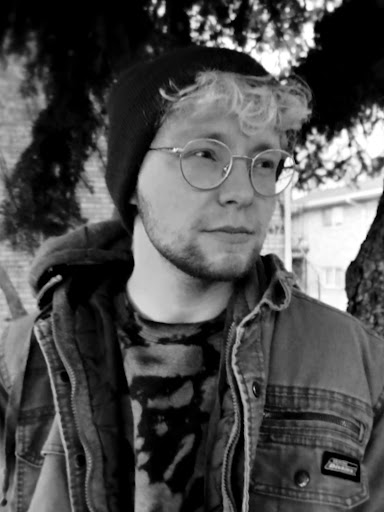
Noah Barlow, photo by The Prophet

 South Provo Prophet