Giving thanks in South Provo: an interview with Food & Care Coalition client, Leandra

Food & Care Coalition client, Leandra, photo by The Prophet

“Everything you need to know to live on the street you learn in kindergarten. You learn your manners; your “please,” “thank you,” and “you’re welcome.” You learn ABCs, 1-2-3s, and look both ways before you cross the street. Don’t get in the van because there’s never candy, there’s never a lost puppy. You learn caring, sharing, and politeness If you don’t have anything nice to say, don’t say anything at all. That’s pretty much it.”

Leandra King has lived on the street in Provo for the past four months, faced with significant health challenges: PTSD, a personality disorder, atrial fibulations; intestinal bacteria that causes reflux, nausea and constant abdominal pain; premature menopause; schizophrenia; ADHD. The medications to treat these issues are incompatible. She is the mother of four kids—ages 24, 19, 17, and 12—and a 2 ½-year-old grandson. She’s been through rehab, and while she admits that she still drinks, she’s off drugs. Wasatch Behavioral Health is handling the case to get her off the street.

Leandra’s story is fraught with hardship, but she stays positive. “I’m trying to bring the good souls together on the street.”

It’s not uncommon for the homeless to experience violence, and Leandra is no exception. Provo Police Department looks out for her, she says.

“As long as they see you’re doing good, and because I’m not smoking a crack pipe or doing drugs, they make sure I’m okay. A guy knocked me out last week. I ran away and hid on a ledge under the bridge. At night the cops came to check on me. They said, “Leandra, you’re trespassing. But if it takes 5 or 6 hours to clear out, we understand. But technically it’s trespassing, so be sure you don’t come back.”

At night she sleeps in inconspicuous spots on the street, or under a tree at the Provo City Temple, where she says she isn’t hassled. “I have this amazing body blanket and another blanket that I wrap around me. I double up my clothes, and I have a sleeping bag. And today this nice lady gave me a jacket.”

On the day prior to Thanksgiving she reached out to her family living in Highland. “I called my family today, but they shut me down. My mom said people wouldn’t appreciate me being there.”

To explain why her family chooses to turn her away she says, “I have a story. I’ve lived twelve lives. There’s so many things I’ve seen and done, both good and bad.”

When she was eleven, Leandra’s father, who was a first counselor in the family’s LDS ward bishopric, came out as an atheist and left the church.

“I started drinking then. I was a daddy’s girl, and he left us.”

Leandra has five sisters and a brother. She quickly became responsible for her younger siblings. “I raised my youngest sister because my mom got remarried to this guy, and they were fighting all the time. She called me mom. I dropped out of eighth grade. [My mom and step-dad] had me stay home from school to watch he instead of getting a babysitter. They were always fighting, and the cops were always at our house. My sister would sleep with me in my home because she was so scared.”

At fourteen, Leandra’s twenty-year-old boyfriend moved in with the family. A year later she was raped by another man, and at sixteen she found herself pregnant.

“My boyfriend left me when I found out. He said I was pregnant by the guy who raped me, even though the dates didn’t match up. I had my daughter and then he came back. We got married when I was seventeen, and I moved out of my mom’s house. My ex-husband ended up sleeping with my sister, and me and my daughter moved out of his place. I raised her alone for five years. I always worked. I worked with elderly people as a group manager at a group home. I was a personal trainer and a nutritionist.”

She and her daughter moved from place to place until Leandra became pregnant again with her second child, a son. At that point she and her children moved in with her sister. She continued to have problems with abusive men. One of them worked for a drug cartel, she says.

“I isolated myself, stayed with my mom for a while, and just shut myself away in my room.”

She met the next guy in Harriman. 

“He immediately started pimping me out. He ended up being a gunslinger, making guns and selling them out to gangs.. I was there for a week, and then I took a job cleaning houses. This guy found out, thought I’d crossed him. He put a hit out on me, tried to tell me he owned me.”

She fled to St. George, but the gang followed her every move. “My family was scared because they were after me, and they’d killed two of my friends. They followed me. They knew every move I was making. I came back here and went to rehab.”

After that Leandra’s luck seemed to change.

”Four and a half years ago I started working out at the gym, and became a competitor in fitness modeling. I got sponsors and took second place at nationals. My main sponsorship was in Florida, so I left my kids here to finish school, and I moved there. I met a man and became jealous of all of the media attention I was getting and started threatening me. At the time I had a townhome in Vineyard. I was working for Nudge, making $1500 a day as a trainer, and competing as a fitness model. I had the world. I was going to move my kids to Florida, and then this guy became abusive. I woke up with broken bones and head trauma in a hospital ICU back here in Utah. I had to learn to walk again.”

Time and again, she found herself knocked down. “I don’t understand why I’m out here. I feel like my siblings are all so accomplished. I was established for a while. I thought I had it all, but now it’s like I’m the lowlife. After the abuse, I couldn’t take care of my kids. I lost everything. My family is mad at me living on the street. I’m always the problem child. I express opinions and they tell me I need therapy. They say, “Go talk to your therapist about it, we don’t need to hear it.” I have borderline personality disorder and PTSD due to severe trauma. I’ve been in therapy since I was 15-years-old. My sisters have problems too, but I guess I stand out—the squeaky wheel. I don’t get them.”

Today, Leandra is celebrating Thanksgiving with her street family at Food & Care Coality, where offers comfort, and her own belongings to those who don’t have as much as she does,

“Being out here makes me so much more grateful for life. I’m trying to just be a strong person, and show empathy. I’d do anything for anybody out here. There was this lady; I had a pair of socks, and she was cold, so I took off my socks and gave them to her because she needs it more than I do. I could probably go home anytime if I played the part, you know? And that poor girl probably couldn’t. I feel like I have to save people. My therapist here tells me, “Leanra, you have to save yourself first.” But I feel like I’m strong enough that I can do this for other people. It’s my calling. Every day I help out over at Community Action volunteer work. It’s good karma. I love helping people like that. It feels good.”

Even in the midst of her struggle she reflects on what she does have.

“I’m grateful for a lot. I’m grateful for my kids. I’m grateful for the love out here among the street people. I think a lot of us out here on the street are choice spirits. People who aren’t on the street forget to stop and smell the roses. You know what I mean? They don’t take time to look up at the sky at the beautiful clouds, the trees; they don’t appreciate that anymore. We don’t need that. There are some really, really good people who live out here, and I love being with them. I enjoy it. I’m grateful for the Coalition, my street family, and I’m grateful for the lady who gave me this jacket.”

Initiative: an interview with transgender artist, Noah Barlow


Transgender man, Noah Barlow, moved to Provo with his family in 2010. He graduated from Timpview High School in 2015, and was accepted into Utah Valley University’s art program on full academic scholarship. He has plans to complete his BFA in illustration in 2023. His watercolor painting, Initiative, was created as a ritual act of self-discovery, and a meditation on gender that lead to his transition. The Prophet had the honor of interviewing him about his experience with gender identity at his home in South Provo for the 2022 Transgender Awareness Week. November 20th, Transgender Day of Remembrance, is observed annually in the United States to memorialize the trans persons lost to violence in the preceding year. To date, 32 deaths have been reported due to violence toward members of the transgender community in 2022. Many trans fatalities go unreported.


(20 minute read)

How old were you when you got in touch with the fact that you’re trans?

I was twenty-two in 2019, the year I came out. It wasn’t that long ago. 

Prior to coming out, many trans people experience a sense of extreme discomfort—or dysphoria—due to a “mismatch” between their primary and secondary sex characteristics, and their gender identity. Did you?

At first I wasn’t sure if I felt entirely like a man, and even now I don’t know if I feel more one way than the other. It’s just more convenient to present in a masculine way. There was this feeling  of discomfort being perceived the way I was “supposed” to be, so I was always self-conscious about how I could be an object of a sexualized gaze. I didn’t want people looking at me that way.  I was uncomfortable with my breasts and my figure. I admit, sometimes I would lean into it and I’d dress in a certain way. I’d put on an outfit in the morning, and then go out and think, “Man! I wish I’d worn a higher cut t-shirt.” I knew people were going to be aware of my boobs.

Now, I can put something on and not even think about it. There is no pressure to occasionally dress up in a feminine way. While there are some days I should dress up cute, I generally wear whatever I want. I don’t have to worry about being uncomfortable once I leave the house. Anymore, I’m worried about being perceived as a threat or creepy or something, remembering what it was like to be in that feminine position, and feeling scrutinized by the men around you. Now I worry that I am causing people anxiety, specifically by women, by being around them.

You have a lot of trans friends. How does your relationship with your gender compare to theirs? Have you had discussions where you talk about the realization that maybe your gender assigned at birth wasn’t the right fit for you?

Yeah. I have several trans-masculine friends. I don’t really have any close trans-femme friends. I only really know about the trans-masculine, or non-binary experience. One of my friends in particular, they and I grew up together, and I forgot a lot about what it was like being a little kid until they started reminding me the ways we hung out and played together. We were a couple of weird little kids. There was something a little different about us that I didn’t notice until later. Something was off—I didn’t quite know what it was—it wasn’t just because we were transgender. I honestly think that being transgender is just one of many solutions for coping with feeling like there was something different about you. 

I don’t know that gender is inherent, one way or another. It’s not like a cis person has to be cis forever. It’s not like some eternal, spiritual truth. But on the flip-side, the same goes for a trans person. It’s not like if I was born at another time and place, and another set of circumstances I would have been trans. I think it was largely circumstantial, which doesn’t make it any less valid. I feel like me and my friend started figuring things out at the same time, but independently of each other. I came out, and then I remember they commented, “You coming out has shown me I can be more open about my gender.” I think from there we’ve gone in different directions, where they’re non-binary and then I’m flat binary. Being non-binary is a lot more complicated; subversive almost. So we’d talk about what it means to be trans-masculine together, but at the same time their experience wasn’t the same as mine. I don’t really know what it’s like to be non-binary, but I do have those feelings sometimes. There’s obviously a material difference between me and cis men, but that doesn’t make me not a man, just a different kind of man. It’s funny looking back. We were both a couple of weird little girls together, and then we grew up, and we realized that those experiences, how we were when we were little, could have pointed toward where we eventually ended up. You could say we’ve seen this explosion of people coming out as trans men. I think it has a lot to do with our economic conditions and how people are coping with it. I don’t think that makes transgender any less valid, but I think we were both weird little kids that were stifled or choked by the requirements necessary to survive under our cultural and economic expectations. One way that we are able to cope or adapt was through gender. I don’t know if Sell would agree with me, but this is something I’ve been thinking about, and it’s probably a huge difference between me and other trans people. Conservatives will freak out over the “trans ideology” or the “trans agenda.” The way I think about it might be a little taboo, because I think trans-ness has a lot to do with our economic structure. There have always been trans people. What we would conceive as transgender has existed under different names for thousands of years, but I think the way it emerges now is highly specific to modernity. Other trans people might argue we’ve been here for thousands of years, but society is just paying attention to us now. Part of that is true, but I think capitalism is so stifling that it literally contorts people, like metamorphic rocks. It squeezes you until you fit a shape that’s more compatible with the system you live under.

It’s so dangerous and upsetting to be a woman, and it has been for centuries under a plethora of societal structures—but I think it’s particularly so now. I feel like a lot of the time that results in trans men. I feel like that’s the only thing some people can turn to. I’ve been thinking about it a lot lately. I don’t know; maybe I’ll change my mind later. I don’t want to make people mad. There are those that think that gender is some spiritual, transcendent thing, and I honestly feel like anyone could be any gender—even cis people. It’s just that under the circumstances, they happened to not need to make that adaptation. 

How long after you came out did you start your medical transition?

I waited for a bit. I came out in April of 2019, and I started taking hormones in August 2019. Then I finally got surgery this year in February for a double mastectomy. I feel like other people usually start hormones before they come out, or just after, but it took me a while just because I’m distractible and I procrastinate a lot. 

What was the reaction from your family?

It was pretty supportive. There are people it was hard for, maybe, and there might be family members who just haven’t voiced to me that they’re not okay with it, but people are generally good at keeping their opinions to themselves most of the time. My paternal grandma was kind of goofy about it in her older generational way. She didn’t outright reject me. She was really sweet, but she treated my coming out like I was a little psycho or something. She’d say stuff like, “I know you’re having this psychotic moment right now, but just know that I’ll always love you.” That sort of thing. And I was like, Thanks Grandma. It’s been a few years, and I think she’s either come around, or been lectured by my aunts. One aunt told me, “I sat down and had a talk with grandma, so she better be nice to you, or else.“ And she was nice to me; she just thought I was having a mental break or something. At least that’s how it felt. After a while she was eventually, “You’re my grandson.” 

On my maternal side, my grandma is so out of touch with how to be a decent human being that she couldn’t even have a proper reaction to having a grandchild coming out. I feel like she’d realize that times are changing, and she couldn’t react the horrible way that she did when [my mom] came out at bisexual. I thought she wouldn’t have that same reaction with her grandkids, but it was pretty much the same. She took it as a spiritual challenge for herself. She’s very good about making anything about herself or twisting it into how it relates to her spiritual journey, or a test of her faith. [My great-grandparents] have a family newsletter, and as far as I know she’s always said bad stuff about my mom and our family in it, ever since the newsletter got started. After I came out, my grandma wrote, “My granddaughter wants to be a man, and I know that gender is an eternal truth. Even though she will always be a beautiful daughter of God, I will call her Noah.” I thought, alright. It’s a little weird to call a girl Noah, just go one way or the other. just outright reject me. It was really weird. The halfway crap made me want to talk to her even less. The waffling made me feel even less safe. If she’d just been outright, “I don’t accept you,” that’s a straight answer. But her being middle-ground about it, I thought, “This is a snake. She’s a snake.” She didn’t tell me that she was going to out me to the entire extended family, whom I didn’t talk to myself. At first I didn’t care about it, because I’m generally at a baseline pretty chill about things. But later on, a year or two later, it started getting to me, and I thought, you know, that’s actually kind of fucked. I actually don’t want to talk to my grandma anymore. I blocked her on everything, and really nothing of value was lost. I didn’t talk to her anyway because she’s a bad person in the first place, and I don’t care for her family. They all have the same ideology. Like I said, I don’t think gender is an eternal truth. I think anybody could be any gender, and decent people would accept them, however a person needed to be in that moment. I subscribe to the fluidity of gender and sex.

My parents were great, though. I was significantly luckier than most trans people in terms of coming out to family. It had been a conversation I’d been having with my mom for a long time. At first I was thinking, I’m non-binary or something. I knew I wasn’t a girl, but I don’t know if I was completely male either. I just didn’t like being seen as a woman. The word “woman,” referred to me, makes me cringe. No, I’m not. There’s such a gravity to the word. I feel like you really have to know who you are to say you’re a woman, but I guess calling myself a man has a lot of gravity too. I think that’s because whenever I hear people talking about men it’s often in a negative way.

But you feel more comfortable with that?

Yeah, or saying I’m a guy, or like a dude. My mom was totally fine. It was a conversation we continued to have. At the time I was in a relationship that was completely preventing me from exploring that part of myself. My mom was subtly trying to nudge me out of the relationship, and nudge me into being myself at the same time. We’d talk about it a lot. When I finally decided I wanted to come out my mom was unsurprised and accepting. I asked them what name they thought I should choose, because I was finally going to transition. All the names I picked were corny as hell, and I asked my mom, “What would you have named me [if I’d been assigned male at birth]?” And they said, “Oh, your younger brother’s name.” I was all, fuck! Then they said they liked the name Noah, and I thought that sounded awesome. It’s a normal name, not corny. It was popular in the year I was born, just like my deadname. I figured I’d choose it for now, and if it didn’t work I’d change it—but It stuck.

Does it feel like you?

If I hear anybody say “Noah,” I think they’re calling my name, so it must. I’m completely used to it now. Noah sounds pretty similar to my deadname, so it wasn’t all that hard to make the shift. I feel like it wasn’t much of a leap, just a re-gendering of my name. 

My dad was really cool, too. I’d put off coming out to him because I had no idea how he was going to react. He was always pretty chill about gay people, and I figured if he was fine with them he’d be okay if it was me. My mom said, “You better call him. You better tell him.” When I did I kind of beat around the bush. I said, “Dad, I’ve got something to tell you, but please don’t freak out. It’s going to be okay. Don’t worry about it. It’s not your fault.” And he was like, “Are you pregnant?” And I said, “Oh, god, no! NO. It’s actually fine. It’s not that bad.” But I told him and he said, “Well, I love you.” I told him I loved him too, and then said, “You know if it takes you a while to get used to it, you can call me by my deadname if it’s too hard.” I was prone to making concessions at the beginning, because I had a good relationship with my immediate family, and I didn’t want to be authoritarian about it. Maybe I would get pushback from the trans community for saying that, but I think that’s the way to go. I know it sucks to get deadnamed and misgendered in the very beginning, but there’s going to be mistakes and you need to be patient with people as they get used to it. It even took me a while to gender myself correctly in my head, and start thinking of myself by my name. At first it took my dad a while to start calling me by my name consistently, and now he has no problem with it. If he accidentally misgenders me, he’ll immediately correct himself. I remember him telling me a while ago that he’d picked up a book about gender that his fiance recommended to him, and as he read it he said he better understood all of it. I said to him, “Aw! You didn’t have to do that.” But it was really nice.

And then as time came that I was going to get top surgery I thought it would be covered by my dad’s insurance, but then his work switched to another provider in the new year when my surgery was scheduled. Suddenly I wasn’t covered, and I was thinking, “I don’t know what I’m going to do. My life is over.” But my dad just forked over the money for it. He said, “If this is what you need to feel more comfortable and more at home with yourself, that’s something I want to help you with.” He made it possible. It was pretty tight. Pretty sick and awesome.

I think maybe me coming out gave my mom the permission to explore their own gender too. I think they’d already known about their [gender variance] for a long time, but they weren’t able to consciously grapple with or tell people about it before I came out. This was three or four years ago. I’d been questioning it for a while, from 2016 I’d been having real problems with my gender. And I think even when I was a kid, I think there was evidence there that I was a good candidate for being trans later on in life. Not someone who knew as a child, or had any conception of that, but someone who could choose that later in life as a solution to incongruence that they felt in their place in society.

A lot of kids who come out struggle with self-harm. Especially if they’re trans-femme there’s the threat of violence toward them. Have you had experience with either of those that you could speak to?

I’ve known trans-femme people who’ve self-harmed. Obviously, I’ve read about the dangers of being a trans woman by simply being out in the open, but I don’t know anyone personally that I’m close with who’s dealt with that. I think it’s something you’re aware of as a trans person in general, specifically violence towards trans women. There are instances of trans men being assaulted. There was this insane story I read about a while back where Norm McDonald was on SNL joking about this trans man who was murdered—it really pissed me off. I don’t see stories about violence toward trans men the way that there’s the insane statistic about trans women being murdered, and there’s more and more each year. I feel like the violence comes down to blanket misogyny. When you’re a trans man, if you’re assaulted, it’s for being perceived as a woman. It’s like I was talking about earlier. Being a woman is a violent experience. It wasn’t explicitly for that purpose, but I think my transition was in some way to escape that, to put myself on the outside, or extricate myself from the violence. Testosterone really does do crazy stuff to you. Generally, I think I pass even though I’m short. I don’t know enough trans women to have discussed it with them personally. I was really lucky with my family, so I didn’t experience any violence from them, or the threat of being homeless, or losing financial support, or community. I was lucky in a lot of ways.

Do you observe Trans Day of Remembrance?

I don’t even know when it is, I’ll be honest. My mom will tell me, “Today’s the day.”

And how does it feel when the day comes around?

It’s somber. I don’t know if it’s the same for everybody, but I think the day has a different meaning for trans men than it does trans women, and so it doesn’t hit me as much even though they’re my community, or they should be. I have one trans-femme friend, and they’re non-binary, so not outright presenting as a woman, so I don’t know if they’ve faced violence. I don’t know how to ask that kind of question. I try to distance myself from the day because I don’t like to be in my emotions about that sort of thing, because I end up getting too pissed off.

How do you feel about having a week dedicated to trans-ness?

I guess not much because I haven’t seen anybody talking about it. No one told me it was. I saw like one post about it on social media, and then I forgot. But it’s always kind of just there anyway, so it’s not like I have to be reminded. A huge percentage of my friend group is trans, so it’s like we talk about being trans every single day. It always comes up in one way or another if it’s in jokes or some serious comment, or if something bad happened to someone trans and their family was a piece of shit, or if some person was a dick to them at work, or if someone was telling an offensive joke or something. Every day is trans day.

You say you pass pretty well. Have there been any instances where you haven’t passed, and it’s caused problems for you?

A majority of the problems I have with passing come from my vocal range. I have a hard time passing over the phone. Or if someone can’t see my face and they hear my voice, they misgender me occasionally. I haven’t had many problems with it since shortly after I started taking T. At first, I think I looked like a baby butch lesbian, and so no one had any real inclination that I was even going for something else. Then my beard started coming in, and I think that really helped. I’ve come out to bosses or co-workers in the last year, and they’ve said that they’d no idea unless I’d told them. They said they thought my voice was just like that. It’s happened enough times that I’ve told someone and they were pretty surprised that I think I pass pretty well. I’m just a small guy. 

What differences did you experience after top surgery, speaking to your dysphoria in relationship to your breasts?

They were something that I couldn’t ignore when I was undressed to take a shower. I felt embarrassed looking in the mirror. It was strange to see a dude who had boobs—weird. But when I was out and about, I was always binding so you couldn’t tell anyway. But binding gets uncomfortable; hot, sweaty, and itchy. So when you’re paying attention to that feeling, you’re reminded why you’re feeling that way. You’re binding because you have breasts. I couldn’t bind at work in the past because I was doing heavy lifting, so I’d have to wear sports bras. I was worried that someone would notice, so I’d wear baggy clothes. I think the worst time was when I was in the bathroom getting ready for a shower, and I’d think, “Goddam it!”  Now it’s something that I don’t have to think about at all.

You did your watercolor Initiative prior to your top surgery. What were you trying to convey in that piece?

I just wanted my breasts gone. I painted Initiative even before I came out. I made the excuse that I was just interested in trans issues, and that I thought it would just be cool to paint it. But it was explicitly how I felt. I wanted to cut my boobs open and take all the extra shit out. I came out right after.

Was there any liberation into painting this work?


You know how they made up this legend about Lee Harvey Oswald being a Marxist-Leninist so they had to have precedent for why he shot JFK? They said he’d been in the Fair Play for Cuba committee, and that he’d defected to the Soviet Union, and he married a Russian lady, and he went on TV talking about communism, and when he was in the Marines he talked about communism. It was kind of like that. It wasn’t a legend, per se, because it was true. I was building a legend for myself where I could say, “Here’s some evidence that I was thinking about this before I came out.” It didn’t just come out of nowhere. I was ideating enough about it to be drawing pictures about it. At work I would doodle little pictures of myself if I had short hair and no boobs; what I’d look like a little dude making pizza. So it felt like laying out a breadcrumb trail. “Look, this is how I came to this conclusion.” I know I was dropping hints to the other kids in my watercolor class as I was painting it. When we had class critique my classmates would say, “So, her shoulders are kind of wide.” The drawing has a plethora of anatomy problems in the first place, whether it’s a trans person or not, so I wasn’t trying to defend it completely, but my classmates were critiquing the painting on stuff that was the point entirely. There was a guy who said, “You know, for a woman her shoulders are kind of too muscular, too big. And I don’t know if you meant to, but his pec looks more like a breast. It’s poking out too much on this side.” And I said, “Yeah. It’s a transgender guy, so the fact that you’re saying that means I actually succeeded. So thanks.” It was like dropping hints. There was one classmate that I would chat about it with. She was super sweet. She asked while I was painting, “Is this about you?” And I said, “Kind of, yeah.” She gave me a hug and was really sweet about it. It felt like while I was painting, it let me settle into those emotions. Since it takes such a long time to paint it, you have to really commit to what you’re going to paint. You’re contemplating it the whole time you’re painting, thinking about the elements and what they represent. It was like a ritualistic, prolonged coming out to myself. That’s what it felt like, like a confessional kind of thing. It gave me time to think really hard about it, and now I just wish I’d been better at drawing at the time so the anatomy would look better, but, oh well.

What’s it like being trans in Provo?

I don’t think different than it would be anywhere, but with the caveat that I’m a trans man, and not a trans woman. I know that a lot of people don’t like to talk about it, or they would disagree with me by saying this, but it seems like testosterone has a much stronger, more powerful effect than estrogen does. The effects estrogens have are maybe equally powerful, but they’re harder to see. When a trans guy starts taking testosterone I think, pretty reliably, he’ll pass within a year or two. It’s rough to talk about, because passing isn’t the goal for a lot of trans people. Some think passing shouldn’t even be a concept. And that’s true. I don’t even think gender should be a thing, but we don’t live in a perfect world. Trans misogyny is a lot more relevant than trans misandry, and I think even with trans men, in terms of transphobia, it’s really about misogyny. A lot of transphobia can just be boiled down to a hatred of women, and a hatred of conforming to femininity when you’re not “supposed” to, or when you approach femininity in the wrong way. It’s something that’s so policed, and I don’t know why, but I think it’s a lot less dangerous to be a trans man. People might see a trans man early in transition and think, “Oh, that’s just a tomboy.” If they think about it at all. That’s why there’s such a thing as “boy mode-ing,” because I think it’s materially dangerous to be a trans woman. From the one trans woman I know, I heard stories about people staring at her in public and leering, and I can’t help but think that’s got to be really fucking scary. Like being at the gas station and having someone staring at you, that would be really creepy, but people don’t give me a second glance. I had a co-worker who made fun of me because I’m short, but he was just that kind of guy who was managing to piss off every single one of my co-workers, so he probably wasn’t doing it because I’m trans. He wasn’t exactly smart enough to pick up on that detail. So I figure he’s just the kind of guy who would offend everybody, not because it was particularly colored with transphobia. I had another co-worker that I came out to because he was being transphobic, but I felt pretty secure in my job, so if either of us was going to get fired it would be him. He and I also had a pretty good rapport, so I felt okay standing up to him. But we were closing one night and he saw a couple of trans women in the store. He came into the back and started trying to gossip about them with me, just saying stuff about them. And I said, “Hey, I don’t really feel comfortable with you talking this way. I don’t like talking about people that way. And also, I kind of have a vested interest in this because I’m trans, and those are my people.”

What was his reaction?


He was dumbstruck. I think he was afraid I was going to talk to HR, which is not the kind of person I am unless you’re a real asshole for no reason. This guy wasn’t an asshole, he was just uninformed. He had no idea, and unless I’d told him he never would have guessed. He said, “I’m sorry, man. I didn’t even know. I shouldn’t have said something like that.” I told him it was okay, and that I appreciated the apology. I’m glad that I don’t work there anymore because I didn’t want to continue being around him. It was awkward between us afterward. He’d said something embarrassing for him, in front of the demographic you don’t want to say it in front of. I handled it really chill, I think. I don’t know if I should have been rude or what. I don’t handle confrontation well. For those women I’m glad that they didn’t have to encounter him face-to-face, because I was back there. Not that I think he would have done anything to them; he was just being an asshole behind their back. But I’m glad I was there to check him on it, because maybe in the future maybe he won’t be as awful when he sees a trans woman in public. 

I guess I became privy to his locker room talk, which honestly, that’s a person-to-person thing, there’s good people and bad people, there’s good men and there’s bad men, although it may be more heavily weighed one way or the other. I feel like that was a time I was specifically aware that men are out there talking about trans women like this. He’d said something like, “Did you see those two guys out there? There’s guys out there dressed up like women, but you can totally tell.” And I said, “Tell what? What do you mean?” I was thinking, let’s not talk about people like that. But knowing that he was thinking those things and that he would have said that to another guy, and that guy might joke about it. It grossed me out. I mean, what did these women do to you? They’re just out there shopping. Leave them alone. I don’t know if that’s a Provo-specific thing, but I’m sure it happens elsewhere. Some people might say it’s dangerous here, but I actually don’t know if it’s quantitatively more dangerous for trans people than it is anywhere else. That is to say, I think it’s generally dangerous in most places to be a trans woman, regardless of where you are, not that it’s anymore so here. Especially because people are passive aggressive assholes here, they’re passive aggressive, but they won’t attack you. They’re Mormon, and you’re not supposed to attack people when you’re Mormon, but you’re allowed to be gossipy and passive aggressive. That’s what Mormonism seems to be about.

Do you mind if I ask your sexual orientation?

I’m bisexual, and I’m in a gay relationship. We had started dating two weeks before I got top surgery. We started dating, and all of a sudden I was bedridden. He’d come over all day, and we’d watch YouTube videos, and he’d sit there with me. It was really sweet. He’s a good guy.

How is it being a gay couple in Provo?

We’re kind of disgustingly affectionate in public. I was kind of worried at first. I said to him, “Tell me if I do PDA too much.” And he said, no way. He thinks it’s awesome. I’ve been in one other gay relationship while I was passing, and if anyone said anything, it was always a middle-aged lady. She’d come up to us and say something like, “I love this!” One time a lady came up and said, “Thank you! I’m from New York, and I miss this so much.” I didn’t even know what to say, because it was really funny. We said, “You’re welcome!” 

What advice would you give teens in Provo, who are considering transition, or who know there’s something up with their gender?

If you can sense that it would be dangerous to come out to your parents, then don’t. If you know someone it would be safe to talk to, talk to them. I’d have to do research to find out who’s legally obligated to tell your parents. I don’t know if therapists or teachers are in Utah. I was dealing with being bisexual as a teenager, and the conversation didn’t involve being trans yet. I don’t know how to approach the question of how to care for, or rescue, or administer treatment to trans children or teenagers. I would tell them to cut off trans-antagonistic family members as soon as they can. Just get out. It sucks because, even then, I don’t want trans kids to isolate or alienate themselves from their families. But sometimes there’s nothing to be done about it. Sometimes those parents are a lost cause. 

What would you tell Provo parents whose kids are beginning to question their gender?

I wish that parents could realize that it’s not the end of the world to shed their preconceived notions of gender, or ontology. Right now my friend’s parents’ huge hang up with him coming out is that it’s completely incompatible with their Mormon worldview. They say they believe him, they just don’t believe in transgender. They just say fuckshit. I don’t know how else to describe it. It really is okay if Mormonism isn’t the be all, end all ideology. I mean if it’s not true it doesn’t have to be the end of the world. There’s other shit out there. But that’s what Mormonism teaches you. If their doctrine isn’t it, basically you’re fucked. They teach you that if you don’t believe the doctrine, then nothing else is real. If Mormonism isn’t it, there’s no point. I don’t know how to even contend with the amount of brainwashing there is in the religion. It’s insane to me. That’s the main issue with where we live, right? The Mormon stuff. I’ve tried to do gymnastics around it in my head, figure out what would be the perfect thing to say to a Mormon parent to make them realize that in rejecting their kids’ trans-ness they’re being abusive. I don’t want to be an epic atheist about it, and tell them it’s all fantasy and they believe in sky fairies or anything. But they are literally letting this fantastical, reactionary idea of what the world was like, is like, is going to be like to get in the way of their actual relationship with their children, or whether they will even be able to have a relationship with their children in the future. Doctrine in religion is so often arbitrary. The only morality that makes sense to me is a morality that dictates when you’re harming others, or when you’re harming yourself in a way that will harm others. Being trans doesn’t harm anybody. I don’t understand parents who can’t do the cost-benefit analysis. They have this relationship with their child, that they made and allegedly care about and wanted, and that’s somehow less important than this idea that they have. A material thing is less important than that idea somehow. 

The ideas regarding their religion?

Yeah. I guess it’s because there’s so much social clout tied to being a Mormon, and a person’s influence in the community. But is that really a place where you want to have clout? The most influential figures in Mormonism say the most heinous shit every time there’s a conference. Mormon allies will make justifications for it, that the blatant transphobia/homophobia is not what they believe. But can you even claim to be Mormon then if you’re not agreeing with what the leadership, the be-all, end-all voices of your religion are telling you. I don’t even know how to help the kids whose parents are that way. Their parents should never have become parents, unfortunately. They’re not the right kind of people to have kids. They’re not nurturing, they’re cruel and callous, and they have no thought other than how they appear to other people. They have this reactionary vision of what a family should look like. It’s not even reactionary, you know. Because being reactionary is returning to something that existed previously. This is going to sound corny as fuck, but it’s more fascistic than it is reactionary, because fascism is wanting to return to this conception of the family that existed in some idealistic time that never actually existed. Like the German folk. That was never a thing. That was some shit they made up, and then told everyone they needed to return to it. But how can you return to a thing that never existed? There was never a perfect Mormon family. The only thing you can return to is child sex-abuse and polygamy. If you’re going to return to an ideal it’s that. And so this concept they have that everyone in the family is straight, and they’re all going to have eternal hetero marriage—that’s a history that never existed. There’s never been a perfect family where every single person in a family is able to conform to exactly what is expected of you by the Mormon church. So I think what they believe is ultimately fascistic. 

I like that you’re willing to touch on the hot-button trans topics. What does it mean to be trans, and what are the motivations for transitioning, do you have to absolutely identify as a man to be able to step into trans-masculinity or trans-femininity. These things aren’t concrete; there’s still a public dialogue going on.

That’s why it’s so funny to me that conservatives call it a “trans ideology,” because no one can fucking agree about it. It’s like how there’s constant schisms in political parties. The trans community has all this in-fighting. We can’t agree on any of it because everyone’s experience is so different, so to call the discussion an ideology, a terrorist ideology that we’re using. When they say we’re trying to indoctrinate kids—I’m like, “With what?” None of it makes any sense. Transgender people are just here.  

Noah Barlow, photo by The Prophet

Guest post: Mail-in ballots preserve voter rights

In 2012, I landed an interesting temp job: Elections Clerk at the Utah County Elections office on Provo Center Street. I learned how to calibrate voting machines, update voter file information, and generally how the sausage of Utah County elections is made. I was particularly proud of using my mission language skills to translate the voter registration document into Spanish. But I learned one lesson in particular that has always stayed with me, and has become even more relevant recently:

Mail-in ballots are the best way to vote. 

This is immediately obvious to anyone who’s worked in elections. With mail-in ballots, there is no need to maintain old voting machines or transport the clunkers to myriad polling places around the county (or at least, not nearly so many). Having fewer polling places saves time and taxpayer money because it requires fewer poll workers and elections staff, and the ballots are easier to count—and recount, if necessary. Utah voting machines did leave a paper trail, unlike some other states’ equipment, but it was on receipt paper that faded over time and could be fouled by an errant fingernail. Mail-in ballots marked with pen have no such problems. They’re also bigger, and therefore harder to lose (or maliciously dispose of.) When my co-workers and I were hand counting ballots that for various reasons couldn’t be read by the machine, it was easy to stack them up in neat piles by whichever race we were counting at the time. The winner was immediately obvious by the size of the stack. 

Those are just the benefits to the election staff. The benefits to the voter are even greater. 

Instead of having to make hasty, oftentimes less-informed decisions in the voting booth, voters have time to research the candidates and ballot measures at their own pace. Instead of having to drive somewhere and possibly wait in a long line, the filled-out ballots can be dropped into a mailbox (or a drop box)—no stamp required.

Overall, mail-in voting increases voter participation by making it easier and more convenient to vote—not just for one group or political party, but across the board. It gives everyone a better chance to cast informed votes. 

On the security side, mail-in ballots are the most secure voting method we humans have ever figured out. They’re not perfect—nothing is—but their very nature makes them harder to commit fraud with, and Utah’s procedures fortify them even more. In our internet-connected world, voting machines are vulnerable to nefarious infiltration, but paper ballots can’t be hacked. Even if one of the machines in the elections office were compromised (which would be very hard to do because they’re not connected to the internet), mail-in ballots are easily hand-countable. Utah also keeps them around for several years just in case a problem is discovered after the fact. 

I had the opportunity to tour the Utah County Elections Office earlier this year. The changes they’ve made since I worked there are incredible. The machine that removes the ballots from their signed envelopes is lightning fast, preserving the privacy of each ballot. But before ballots even arrive there, the signature on every single envelope is scanned and compared to the voter signature on file. Any signature that gets flagged as different is sent to a real human being for further comparison. This, by the way, is the very same security feature that we used in 2012 for our in-person voting. Every voter that year, when they showed their ID, had to sign the precinct book. It was that signature, not the ID, that was compared to the records on file. The fact of the matter is that IDs can be easier to fake than signatures. In any case, identification and citizenship have already been established when voters register. Doing it again at the polling place is redundant and unnecessary. All we need to do is confirm that the individual is the previously registered voter on file. The signature does that equally well, whether in person or by mail. 

Last, but by no means least, is the issue of accessibility. Mail-in voting is far easier for the elderly, persons with disabilities, and people who might not feel safe or comfortable (for various reasons) at a traditional polling place. All these people have the same right to make their voice heard in our democracy as everyone else. Mail-in voting enables them to exercise that right. 

Unfortunately, we are in a time and place where Utah’s fabulously successful and safe elections system is under attack. Extremist candidates are spreading disinformation about our elections system, and some are proposing to send us back to the system I worked in 2012. We cannot allow them to push us backwards. 

—Daniel Craig Friend

Daniel Craig Friend, photo provided by Mr. Friend

Daniel Craig Friend has lived in Provo for twelve years. He graduated from BYU with a degree in English language and editing in 2012. Friend is a devoted husband and father. His young daughters, Sophie and Christina, motivated his decision to enter the race for a seat on Utah’s House of Representatives in order to improve education, legislate for clean air and water, and offer residents more opportunities to strengthen and support their families. In the interest of voter rights, he is supporting a write-in vote for Candace Jacobson as Utah County Clerk—the official who oversees county elections. Jacobsen is the single candidate who defends the mail-in voting system. Friend promises to defend mail-in voting on Utah’s Capitol Hill. Election Day is November 8th. Polls open at 7 a.m., and close at 8 p.m. at the following locations: the Elections Office, 100 East Center Street; Provo City Library, 550 North University Ave; and Provo Towne Center Mall, 1200 Towne Center Blvd. In-person early voting runs October 25th through November 4th at 100 East Center Street. Mail-in ballots will be received until November 1st. Residents who haven’t received a mail-in ballot should contact the Utah County Clerk at (801) 851-8124 or elections@utahcounty.gov.

Clothing Drive for Provo’s Homeless

Temperatures have dropped and people on the street are cold. Next week, Oct. 31st thru Nov. 5th, South Provo Prophet is sponsoring a clothing drive, specifically requesting new and gently used coats, gloves, and scarves. Clothing items may be dropped off at Food & Care Coalition, SPP’s office (DM for address), or, if drop-off is impossible due to disability/lack of transportation, SPP will pick up donations from Utah Valley private residents on November 1st (DM to arrange time.) F&CC will distribute the clothing to the homeless based on need, and, at present, the need is substantial. SPP hopes to gather as many items as possible.

Please spread the word.

#foodandcarecoalition #clothethehomeless #provocity #provoservice #southprovoprophet

Laura Ruiz-Ortega: Ode to Provo City

Ode to Provo City
(Provo you make me weep)

Have you ever felt tied up, unable
to breathe comfortably?
This city makes me feel that way,
Todos los dias
How dare you make my skin a curse?
Sin considerar me persona,
How dare you offer me a golden
goblet?
Al borrar mi cultura,
Have you seen our elders, braid
stories
in their long jet black hair? Yet you
shut them away.
Disfranzas mentiras usando
inocencia pura, y vendes
“Salvación” barata.
Provo, you said our language
doesn’t fit your budget?
Nos borras sin escucharnos
I have dreamed of the day I leave
this judgment.
No, no soy victima,
I simply refuse to put on your
blindfold.
¿Que dices?
Other “Latins” say different, they 
love Provo!
¡Que bien!
Maybe they don’t have a choice but
to drink from your goblet to
survive.
Provo espero no verte de nuevo.
and that you empire falls one day,
Porque a mis hijos no los tocará tu
mancha.

Twenty years ago, Latina poet, Laura Ruiz-Ortega immigrated from Mexico City to southeast Los Angeles. Her father, a biochemist, migrated after facing financial strain following the 1994 NAFTA agreement. He established residence and sent for his wife, a nurse, and their three daughters. Ruiz-Ortega, their eldest, was thirteen at the time.

“At first it was exciting,” she says. As her own sons, 8 and 10, approach their teens, she is reflecting on immigration’s radical transition. “When I came to the United States I was just starting my teens. It was tough because I had relationships in Mexico. My friends and I all went to the same school, and I’d known them for years. Migrating meant I lost those friendships.”

At the time, Ruiz-Ortega only spoke Spanish. Finding her place in the social structure of LA, paired with a language barrier proved a significant challenge.

“It was funny,” she says. “I was able to be friends with the Philipions at school, but not the Latinos because they have a different culture than Mexicans do. It was hard.”

In 2006, upon graduating from high school, Ruiz-Ortega moved to Utah Valley.

“My family had just converted to Mormonism a year before. The following year I came for Brigham Young University’s SOAR program. There was a promise that BYU would accept me at the time, and then, they didn’t. At first they told me it was because of my ACT scores, but when I contacted the counselor, he said that they wouldnt let me in because I’m undocumented. He said the school couldn’t give me scholarships because I didn’t have my [imigration number].”

The story was picked up by the Salt Lake Tribune and NPR.  

“It was discouraging, like climbing a slippery slide. I couldn’t go to school, couldn’t work anywhere; I couldn’t do anything. I tried to go back to California on my own, but my family is traditionally Mexican and overprotective. It hindered me, and I stayed.”

Eventually, she was able to establish herself as a student at BYU studying Spanish translation, but she still felt stuck.

At 23, she served as an interpreter for a combined English/Spanish/ASL ward in Provo, where she met her now ex-husband. They dated for a while, but Ruiz-Ortega dreamed of serving a mission.

“I really wanted to go,” she says, but upon approaching her bishop and stake president about the opportunity she was shut down. “They both told me no, that marrying my ex was probably my only chance, and that I wasn’t going to get another one in life. They told me I should just stick with him.”

She says that her marriage sparked the beginning of her doubts.

”I started learning more about the church; Brigham Young’s racism, and the massacre of the Native Americans in Utah. I knew the church had a racist history. I had read about the Lamanites [in the Book of Mormon], and the curse of the dark skin, and at the beginning I accepted everything. I was young, and I figured that was just how it was.”

Over the next four years she became more outspoken about her concerns. ”I realized the church was really racist. I didn’t feel welcome, kind of like a non-member, and I wasn’t going to have my kids grow up in a place like this. I started questioning my leaders and my parents about the church’s beliefs [regarding faith], and nobody would answer me. They’d say, “Oh, that’s deep doctrine. You don’t have enough faith.””

In 2010, SB 1070 was enacted in Arizona. The legislation allowed state law enforcement to request proof of legal immigration during routine traffic stops. This law specifically targeted Latinos, or anyone officers deemed “suspicious.” Without papers, naturalized or not, a person could be charged with a misdemeanor. Those found guilty of lack of citizenship were subject to deportation.

Local politicians sought to adopt a similar Show Me Your Papers law in Utah, and leadership of the Church of Jesus Christ of Latter-day Saints issued a statement of neutrality on the matter.

“I realized this was not a church that cares about me or my family,” says Ruiz-Ortega. “I started going to protests, speaking out at the church. I was asking members to help, and again they told me I didn’t have enough faith. I was really naive, I guess. I’d thought, well, the scriptures say you’re supposed to love your neighbors no matter what. But it looks like they don’t.”

Then during the 2017 Utah congressional race, Ruiz-Ortega was confronted by an anti-immigration Facebook post on John Curtis’ campaign page. She went to the media. The campaign took down the post, claiming it was mistakenly released by a member of its staff.

“I met with Curtis a couple of times after that with other activists, but he was never happy that we were calling him out on it.”

Today, she continues to face racism in Provo.

“I used to clean houses as a way of earning income. Last year, I found a copy of “The Church and the Negro,” sitting out on the living room coffee table at one of the houses. I thought the church had discarded it. I couldn’t figure out why this family still had it—and on their coffee table.”

The problem extends to city leadership, Ruiz-Ortega says. She and fellow activists approached the city council to voice their concerns about the lack of support for non-English speakers, saying that the city failed to host events and programs offered in other languages.

”It’s not just Spanish. We have many other language speakers in Provo,” she says. The activists were told the city would do more to support its non-English speakers, but nothing changed.

“Immigration is happening,” she says. “I feel immigrants coming into Provo could add to the city. We’re not a threat.” She says she wishes that more members of the Church would realize that their own ancestors came to Utah as immigrants. “Provo ignores the fact that there’s a race problem. They hide behind the concept that everyone’s a child of God, and they don’t want to take responsibility for it.” 

She would like to tell Provo residents to be more tolerant, talk to their neighbors, and just be kind. 

One of her recent poems was a finalist for the 2022 Long Story Short Award sponsored by the creative writing publication, Short Édition. In the work, she takes on the themes of immigration and language acquisition in a new country. 

“Of Unexpected Contortions in Foreign Lands”

My tongue clumsily crashes against the cathedral ceilings of my palate,
It helplessly tries to pick up the broken mirror,
the one she was holding when she tripped
yes, she tripped with the pencil between my front teeth,
the one the teacher suggested I…
“Place this between your teeth,
push your tongue away from the pencil now say r-r-r-rose”
my tongue refuses, she kicks and screams
“¡No quiero, me quieres romper la espalda carajo!”
(I don’t want to, you want break my back, fuck!)
I feel terrible, she has only known Spanish from birth,
and now at thirteen years old, I am throwing her
into contortions we both never imagined
we had to learn fast to be understood in this…country
but it just happened! One day I left my friends,
the house with the tall windows, the cats,
the stray dogs I fed every morning,
and we headed North.
You see one day I was trying to read out loud,
“De biutiful bitch” my class roared with laughter,
She shyly hid in a corner,
blushing from failing to perform the new contortions
of these new lands…she face-planted before them,
“you say beach long e not bitch with the short i”
my poor friend can’t relax, and keeps tripping
in my mouth, I try to hold her hand but it I useless,
she is trying but she keeps accidentally insulting
Hemingway with her Mexican accent.
But through the years,
and the many tears we got better,
just like the guitarist and their calloused hands
we too, had bruised knees, bloody knuckles
and a self-esteem on the mend,
a very sturdy golden scar in its hands
showed the world how
we became magicians,
how we made colors our of gray,
how we became chameleons:
in French, Farsi, Mandarin Chinese,
Tagalog, Korean, and even Arabic.
We broke out of our cast,
the one that fear placed us on
and dared to write
“get better!” on the dirty bandages
after we threw it away
we found our calling,
we connected doctors to their patients,
lawyers to their clients
children to their grandparents,
and book authors to their audiences.
She…healed me in unknown winds,
and together we sit in this room with you
sharing our story and asking you
to love the tripping accents,
those trying to fit a mold that wasn’t created
for their incomparable beauty.
When they speak and sound different,
be very kind for one wrong move
can have their souls hiding in the torment
of unnecessary shame and pain,
what you say friend?
Will you be kind to the stranger whose accent is a vulnerable map inviting you to the warmth of their home country?

Laura Ruiz-Ortega, photo by The Prophet.

Winter’s Tale: a National Coming Out Day narrative

Winter Pool, photography by The Prophet

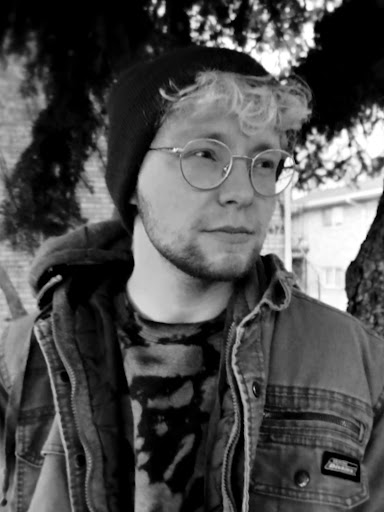
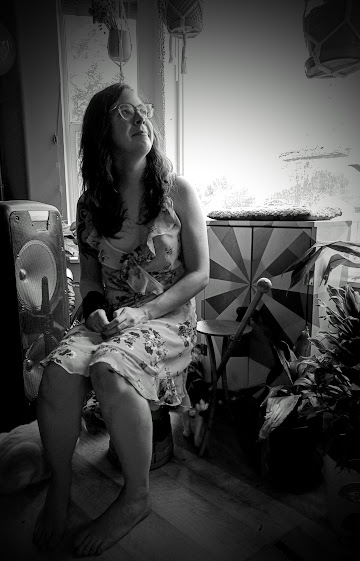
Winter Pool is a gentle 27-year-old non-binary person with a huge heart. They love high fantasy, be it in books, video games, or TV shows. Their long list of likes includes: the “Red Wall” novels, Magic the Gathering, “The Truman Show,” “Eternal Sunshine of the Spotless Mind,” “Rugrats,” “Bob’s Burgers,” “Stranger Things,” and “The Good Place.” They consider “Twin Peaks” their favorite comfort show. “As in rewatching, not comedy,” they clarified. “Even the second season where David Lynch leaves and it gets really weird. There was a chunk of time where I really thought I was going to write and direct movies. When I was young I was always told I could be an astronaut or the president, and I was like—what about a movie director? That should be pretty easy.” They’ve since learned it’s a little more difficult than 19-yr-old Winter thought. In recent months they’ve considered becoming a teacher or a veterinarian. Beachhouse is their all-time favorite band. They highly recommend people check out the album “Once, Twice, Melody.” Their favorite color is orange. Winter recently shared their story with SPP, and it is with great honor that the Prophet is able to feature their narrative as today’s National Coming Out Day post.

I had one of those slow coming outs, where it’s slowly over time. First, you tell one person, and then another person. It depended on where I was. Then, I wasn’t sure who I’d told, and I’d ask, “Do you know?” And they say, “Yeah, I definitely know.” It was over years.

I’ve lived in Provo three different times. I originally came to Provo in 2015 with my biological brother. He wanted someone to move here with him when he went to BYU, and I said, “I can do that. I’m up for change.” I wasn’t going to the Y, just living in BYU housing—the Village and Brownstone—and going to Institute in my free time. It was cheap rent. My brother and I were each other’s anchors, but he was heavy into the Mormon culture, and I could tell it wasn’t for me.

I don’t know that I was even out to myself yet at the time. I was raised with the terminology “gay” and “lesbian,” but I didn’t know there was “trans” and “bisexual.” It was so much more complex, and at the time I was still learning. I knew that I wasn’t straight, but I didn’t realize it was coming more from my gender identity rather than my sexual identity. I feel like I’ve got that straightened out now that I have the support. At the time I knew I was queer and that was it. I thought I was more bisexual because I liked guys as much as I liked girls, but I realize now I’m more on the ace spectrum. So it flipped. My orientation is asexual, but not aromatic. And in romantic relationships I’m into non-binary people. When I meet someone I can usually tell if they’ve got that enby vibe. I like that.

As far as my gender identity, I put it all together when I watched a TV show with a trans character, and I started going down the rabbit hole—“This makes sense!” For a while I thought I was a trans woman. I didn’t know non-binary was a thing, and then I met someone who was enby. That opened up a path. Before I thought I had imposter syndrome identifying as a trans woman, and I realized, no, I’m outside of the binary. I lean much more on the feminine side and I’m comfortable with feminine references, for lack of a better term. At the end of the day I would definitely say I’m nonbinary, and I figured that out about three years ago.

I lived at Brownstone and met N—. She was still going to the Y, and I was going to Institute. I heard a debate going on; something like women getting the priesthood or gay rights.When you’re in Provo on a certain side of a debate you can be isolated because of the culture. I sat down, just to see what was going on while N— was talking to someone. Later, she asked me if I wanted to go for a walk, and we figured out that we were both trans. What are the odds? We became close friends afterwards.

The third time I came to Provo on “vacation” with my biological family, and they didn’t take me back with them. It was the day after the fourth of July in 2018. That Saturday. It’s burned in my head; I won’t forget. I slept in a bit, and they decided to leave me here. I think my biological dad hadn’t wanted me to be living with them for a while. There were a lot of signs there. So I woke up to a missed call and a text, “We’re leaving, and because you didn’t answer.” They left me with $10, a pair of shoes, and a couple of books. I was pretty set. I didn’t know what to do. I tried going back to sleep, because I didn’t want to be awake for this. But I couldn’t; my heart was pounding, I didn’t know what I was going to do. I texted N— and said, “I don’t know if you know anyone, but…” There were people in BYU housing that offered to let me sleep on the couch in the place where I used to live. I felt weird because I remembered when I lived there before, roommates complained when that happened. I didn’t want to be doing that. N— said she knew somewhere that I could stay here while I figured things out. She picked up me and my little backpack, and I moved in with the Pools. We got to be close to each other, and now I live here.

Since then, I still have a hard time going on vacations. I just went to Cedar City to see a couple of plays with a friend and the whole time my brain was “What’s going to happen? What’s going to happen?” I tend to have bad luck with vacations. One time I ended up in a psych ward, another time I ended up going back to Arizona, and there’s this one where I got left. I don’t like fireworks to begin with. I don’t have trauma with loud noises specifically, but I have trauma with unexpected things happening, so when they go off I’m all, “Oh, Jesus!” And then I’m okay. I don’t know what I think is wrong, but my brain thinks there’s something wrong, and then I realize it’s all good. We’re okay. 

My home-life prior to coming out was really strict. We couldn’t go outside on Sundays and we couldn’t watch movies above a PG movie until we got Clearplay, where you go through and set it as cut out “fuck” or “shit”. My biological dad would go through and put all the settings on high. I remember The Avengers coming out in theaters. There was a midnight showing and I asked, “Can I please go out and watch with my friends?” They said no. It wasn’t because it was on a school night and I couldn’t be out late; it was because it was PG-13 that I couldn’t see it. It was so embarrassing. I was a junior in high school. I had to tell people it was too late.

I came from a very stereotypical Mormon family. Eight kids. My youngest sibling is seven now, so there’s a twenty-four year difference between all of us. That’s one of the hardest parts of not having ties with my bio family anymore. It’s complicated. I have siblings who are adults that I talk to, and there’s one that I don’t. But the younger ones—I love them so much and I miss them. I have a strong connection with all of them, but I refuse to talk to my biological parents. I haven’t seen any of the little kids since they left me in Provo. I chat with my little brother on Instagram. He and I weren’t very close growing up. I think it’s typical sibling stuff. We were at the age where he would want to join me and come and do what my friends were doing. I always thought he was going to tattletale on me, so I told him he couldn’t hang out with me and my friends. I’m afraid I might have been mean to him in that sense, but now we keep in touch. He’s an active Mormon, but he’s an exception. I think he’s a good example of where Mormonism could go. You know, where it’s not problematic for you to own up to your history of homophobia, transphobia, racism; where you don’t have to strive to be better than others, just accept that others don’t have the same life decisions as you. He’s like, “I make these choices. You make those choices.” He doesn’t need to be mean about any of it, or use our relationship against me. He’s what a truly good Mormon could be.

When I was seventeen, a junior in high school, I was sexually assaulted. The whole school knew about it, and people took sides. The friends of my abuser were the non-Mormon kids, and then there were the Mormons at school. It wasn’t that they didn’t believe me; it was that they like the idea of me repenting for doing a “gay” thing—even though I was assaulted. It went to court, and the trial lasted for several months. My bishop was actually really cool about it. He set me up with a therapist, and said, “You don’t have to tell me anything. I know in worthiness interviews sexual stuff will come up and that’s something we generally talk about, but I want you to know this isn’t about worthiness.” He was how you’d want a bishop to be in that situation, and I really appreciated that.

At school, the Mormon kids saw it more as a repentance story than something they sympathize or empathize with. Cody, my assailant, was a family friend. Almost no one was allowed to sleep at our house, but they let him stay over repeatedly. There was a huge amount of trust given to him. I didn’t tell my parents when he assaulted me, but I was friends with Cody’s older brother. He called and told my mom. He said, “I wasn’t there. I can’t speak to this because it didn’t happen to me, but Cody did this.” Cody was outside on the trampoline playing with kids when the call happened, and my mom didn’t know what to do with it. My parents asked if I wanted to take legal action. I remember not wanting to, but they were concerned Cody might do it again, and they didn’t want it on their conscience. So I reported. If I’d never said anything, high school would have been so much easier. Those last two years were rough. My abuser was sentenced to jail for six months, but he was released after three months and placed on a registered sex offender list for six months to a year. There are different levels of sex offenders. At a certain level, the person stays on the list permanently. For others, it drops off after couple of years unless they repeat abuse, so Cody isn’t a registered sex offender anymore. I found out my older biological brother was still friends with him on Facebook years after the case. I don’t know if my brother believed me, or if he was giving this person a pass to redemption. But I sometimes looked at my abuser’s Facebook page, and every year he would post: “X number of years ago I was sitting in jail” with a frowny face. People would respond, “wow.” So he uses my assault as a point of sympathy. It makes me feel gross.

A few years later, I was trying to come out as trans to some friends who weren’t quite accepting. There were a hundred emotions that came up that seemed to come from a hundred different places, whether it was trauma or concerns about my future. It was all just bubbling up. I was staying with my biological parents, and one night I was like, I’m done. I told my biological mom so she took me to the hospital. I was there for two weeks while we tried to figure stuff out. I joke about it. What I realized was I’m fucked up; I need therapy. But it is a good place for people to tell you that.

I came out to my biological dad while I was in the hospital. When I was assaulted he was a strong advocate for me, and one of the more surprising supporters. He wasn’t known for being supportive of us. He was usually someone who would tell us what was wrong with us, but he was there for me and I was cool with that. The case had been a big thing. I was in between junior and senior years in high school. Everyone at school knew because it went to court. There were people who believed me and people who didn’t. Cody’s mom showed up banging and screaming at our door. It was a couple of intense, shitty years, and my dad had been very supportive. When he found out, he didn’t take me out for ice cream, but he took me to Orange Julius—very cliche. He said, “I’m here for the Blizzard.” He asked if I wanted to talk about it, and I really didn’t know what to say. We’d never done this before and it almost felt like a trap. But when I was in the hospital and came out to them as trans, he took that support back. He asked, “What does that mean about that situation? So you were okay with it?” I don’t think he believes me anymore that I was assaulted. He was misogynist about it, “So you’re a trans woman.” He thought I was assaulted because we were both “guys.” He thought there was no way I’d want that because we were both guys. “So you’re a woman now. So you did lie about it.” He told me that I was the product of Satan’s whisperings. It sounded like something Gordon B. Hinkley would say. That’s some Mormon stuff right there. My nurse was excited to know how it would go, so I told her, and she said, “Sounds like it went pretty bad.” My brain was stuck in the concept of the biological family.  I remember thinking, “What do I do to change their minds? I have to do whatever I can to fix this, and try to get us all on a good page.” Since then, I’ve learned that’s not the case. I don’t have to stick with them. My nurse said, “I don’t think you should see them again.” And I thought, “Why? That’s not going to help with rebuilding this bridge with my bio family.” I went back to live with them for eight months to a year. They got me to cut my hair and I was only allowed to wear “guy” clothes. I was back to what I would wear in high school: athletic shorts and a t-shirt. I don’t have any sense of style with guys clothes—not that I do with feminine clothes either. But I have an interest in women’s clothes, where with guys’ clothes I think I don’t care as long as it’s comfortable—loose waist bands and whatnot. In the hospital I had this dream where I’d come out and we’re all cool with it even though they’re Mormon. They’d call me their daughter, since I was identifying as a trans woman. I told my bio mom about that dream, and she said, “Oh yeah, that’s not going to happen. I’m sorry, but that can’t happen.” And I thought, “But I dreamed it!” She said, “No, you can’t do that at home. What would we tell the kids?” I said, “I can tell them if you want. I can handle it for you. I can discuss this.” She said, “It would be uncomfortable.”

In the past four years my involvement in the queer community is mostly with people who need QueerMeals. Most people come for food, social reasons, or a safe space to be rather than being at home or BYU housing. I try to get them what they need, hang out with them, and give them that space. I like taking care of people. I like the idea of helping the sick, and people who need stuff. I like being there for them. I like getting to know people, but I also get really anxious about it—it’s a double edged sword with me. But when a new person comes over and I can say, “Hi! I don’t know you. But do you want water?” I really like that. So I’m glad I have the opportunity to do that here at the Pool’s. 

Guest post: For the land, the water, the people—Fight!

PSL River Cleanup participants, Photo by The Prophet

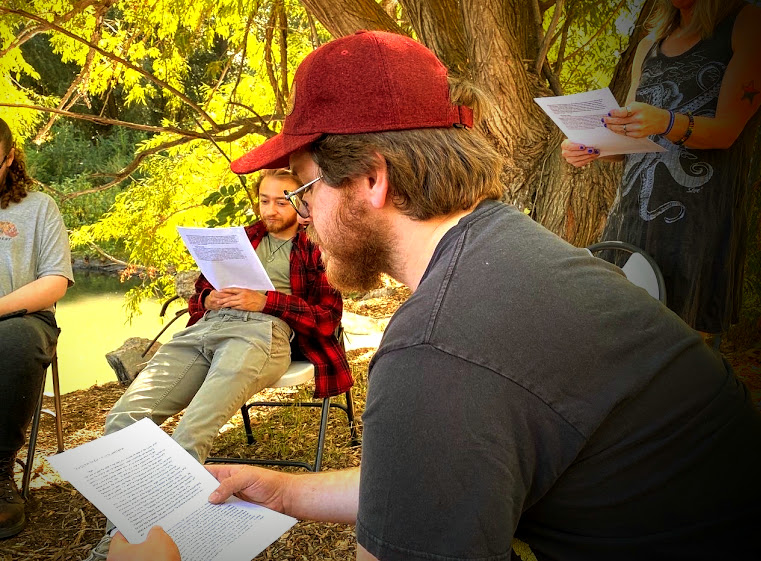
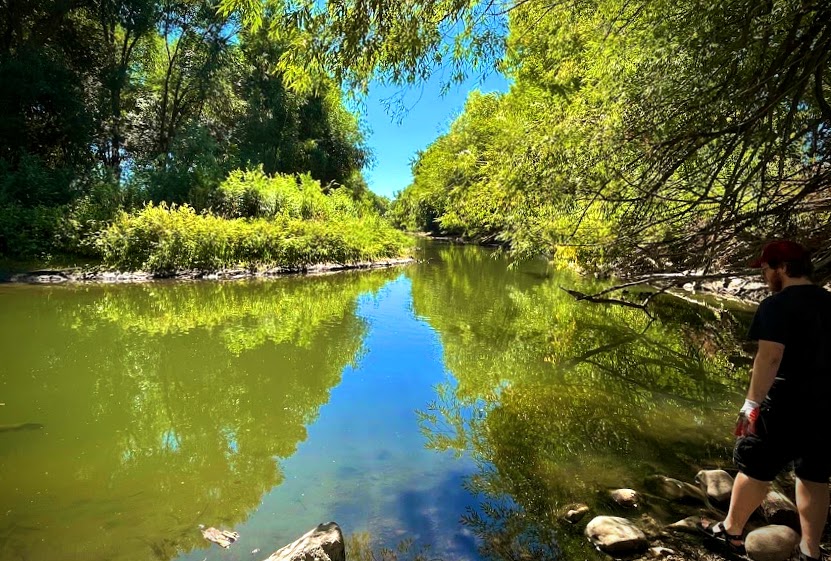
Saturday, September 24th, members of the Party for Socialism and Liberation and the Provo community rallied together to study the history of Provo River and Utah Lake, and engage in the effort to remove harmful waste from the water and its surrounding riverbed. Through this action we not only raised awareness of the history of the Timpanogos water system, we were also able to connect more deeply with our environment in order to make a direct change.

The struggle to preserve the Provo River and Utah Lake is alive and well. Last year, the Utah legislature passed H.B. 240, giving control of any dredging of Utah Lake to the Division of Forestry, Fire and State Lands. The Division ruled the proposed dredging and paving of Utah Lake unconstitutional; a major victory for those working to preserve and protect the lake and its diverse ecosystem.

Despite this, the work is not over. Developers aim to convert the lake into unaffordable housing for the sake of profit, and the ongoing reinvention of their plans threatens to irreparably damage the lake. We must unite and continue fighting for the health of the lake and the river and lake, as this precious water is crucial for the sustainability of life in Utah County and its surrounding area.

Under a people-centered socialist system, teams of trained, environmentally-conscious workers might be deployed to clean the rivers of the waste toxic to life in our valley. These teams, paired with a comprehensive plan for preventing further pollution, would ameliorate the health of our water, and forward the desperately needed process of lake restoration and environmental justice.

Members of the Party for Socialism and Liberation in Provo vow to continue investing our labor and dedication to this important cause. We invite any members of the community interested in getting involved to reach out to us. Follow us on Facebook or Instagram @pslprovo, or sign up online at pslweb.org/join to join us in the struggle. 

—Jacob Sparks

Jacob Sparks leads a PSL study group about the history of Provo River
Members of the PSL and Provo community clean up the river at Alligator Park
A small fraction of the trash removed from the water and the riverbed
Trash collected from the Provo River by PSL
Provo River at Alligator Park

Life Running over Rocks: PSL to host Provo River cleanup

The Party for Socialism and Liberation is sponsoring its biannual Provo River Cleanup on Saturday, September 24th at 11 a.m. Participants are asked to meet at Alligator Park, 3899-3615, Boat Harbor Dr. Volunteers are encouraged to wear shoes and clothes that can get muddy, and water gear if available. A short discussion/study group about the river will proceed the activity. Pizza and refreshment will also be provided.

The Ute nation called the river Timpanoquint, or “water running over rocks.” White settlers changed the name to Provo, after trapper Etienne Provost, for whom the city of Provo is also named.

“The Provo River is central to life in Utah Valley,” says Jacob Sparks, a member of Provo’s PSL chapter. The party is concerned with restoring ecological life to the valley as it was prior to colonization, and keeping the river clean is paramount to meeting that goal.

Provo River originates in the west Uinta Mountains and drains southwest into Utah Lake, providing high quality water to 600,000 living in its watershed. One acre-foot is a unit of volume equal to 326,000 gallons, and Provo city alone utilizes some 30,000 acre-feet of water annually. The Provo River also supplements domestic supply to Salt Lake City, Orem, Pleasant Grove, Lindon, American Fork, and Lehi, and irrigates approximately 48,156 acres of farmland in Utah, Salt Lake, and Wasatch Counties.

The PSL is involved in the struggle for ecological justice, which directly affects the health and wellbeing of the community. Protecting Provo River and its diverse ecosystem is central to that cause.

“When the river is destroyed, it is oppressed and people of color who are primarily affected,” says Sparks. He further explains that ecological justice entails a respect for the land and water necessary to sustain and reproduce life. The Provo River supports not only the residents of Utah Valley, but also its abundant flora and fauna.

Local scientists, legislators, and the general public are involved in the discussion and development of effective river restoration projects. One of the major areas of concern is pollutants, and the need for trash removal. In 2021, local volunteers removed over six tons of garbage from the river waterway, but the problem of pollution and dumping is ongoing. PSL is just one of many environmentally conscious groups which host cleanups along the Provo River Parkway; a 15-mile trail spanning from Utah Lake to Vivian Park in Provo Canyon.

“We sponsor cleanups so often because we want to take a direct approach. Instead of just talking about river improvements, we’re doing it,” Sparks says.

Kaylee Wilkinson, also of PSL, believes that general awareness of the destructive nature of capitalism and its exploitation of natural resources will empower the people of Provo to develop more effective restoration strategies.

“We believe it is possible for working class people to make a direct change,” she says.

Provo River near Alligator Park, photo by The Prophet
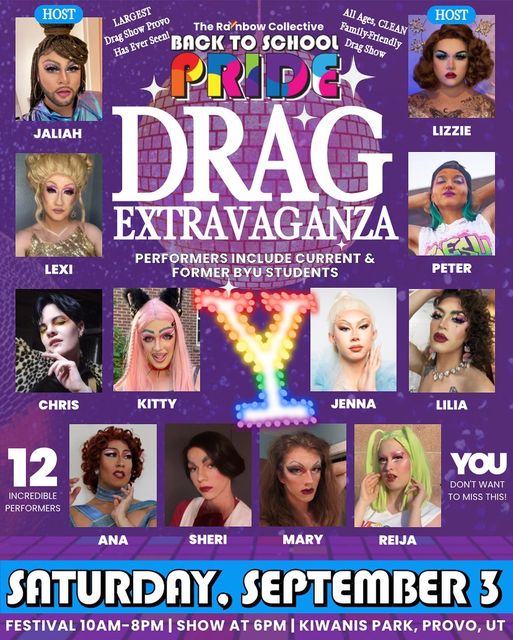
Genuine: the poetry of single-mother, Mary Walker

Mary Walker has an infectious laugh and a natural talent for putting people at ease. She is a 29-year-old single mother living in South Provo with a dog, a cat, and her two young daughters—Summer, 3, and EJ, 5. She grew up, the daughter of a white father and a Filipino mother, in what she calls the “bad” part of Detroit, before moving to Hawaii, where she earned a bachelor’s degree in biology from BYU-Hawaii. While attending the university she met the man she called her husband for seven years. Their marriage ended two years ago after she took out a restraining order against her ex to protect herself from further harm. Although Mary grew up LDS, she says she no longer identifies as Mormon, and that along with her 20-year-old naivety, cultural pressure for women to marry young, and the importance placed on finding a confident priesthood leader for a husband led to her abusive marriage. She often finds herself wondering how the past ten years of her life have been real, and she admits she spends a lot of her time dissociating from the traumatic stress. Although she is currently applying to in-state and out-of-state, PA programs, she is pretty happy being a mom to girls, living in a “cozy” basement apartment, and working as a restorative nurse’s aide. She says one of her best qualities is her skills at time-management, and  enjoys spending her free time doing therapeutic creative projects, “turning anything into something beautiful.” Because she doesn’t have much family support, she’s created a community for herself amid other single moms. As for future relationships she says, “From here on out I’ve decided to listen to my intuition, because it always seems to be right. Alarmingly right. I still do—I just want to be in love. I still want the fairytale. But I’m done looking for men with avoidant attachment styles. I’m strong enough to be alone if I have to.” Mary uses writing as a way to cope with the periodic depression that often accompanies single-motherhood, and she recently shared her work at Speak For Yourself, a once-a-month creative writing open mic sponsored by Provo Poetry and Enliten Bakery.

My Favorite Color is Blue, the Cycle of Abuse

Blue is my favorite color.
Oh, like the ocean or sky or twinkle in
your lover’s eyes, they ask?
No, as I laugh.

Like my skin!
You see, black is too harsh,
and yellow looks like jaundice, 
but blue means soon-to-be promises

of kiss ups, of makeups, of tears drying and
no more crying…
Secrets that I keep for the one I want to keep.
You see, blue is my favorite color. 

Coparenting

… a special place in hell found on earth…

I fall short in everything I do these days.
I fall short at my job.
I fall short as a friend.
I fall short at school.
I fall short as a sister.
I fall short at church.
And lastly, I fall short as a mother.
However you are trying to do everything.
You are trying to play all roles in the “family proclamation.”
I am the main physical provider, the nurturer and the protector.
I have to remind myself to breathe. 
Raising children with a person who is not your partner, 
who is not your friend,
who is not an ally,
and who you continually battle can get pretty exhausting.
You are legally connected to what feels like the enemy,
having to do the part in adult life you were once excited about,
all you dreamed about.
They surely do not train you in church, 
girls camp, school, college or home—
how to go about this.
It’s the hardest thing I am learning
to navigate while trying to balance and do
everything above.
Simply raising children with a spouse united can be 
draining, and even in those circumstances one can have
emotional bursts from time to time.
But imagine doing it now with someone who doesn’t care,
It’s “not their problem” you have to figure it out
on your “parent-time”—which is 65% of the time.
There’s no reassurance that someone recognizes
your best efforts. At this point efforts
aren’t good enough. You’ve got to make it happen. Period.
And there is no hug at the end of the day to let you know
it’s all worth it (not that I got one before).

Some Dirty Laundry

Sitting with the only companionship
of the sounds of air filters in the room—
Buzzing. Humming. Tranced. 
Lost in thoughts.

Then fixated on one thought, idea, memory
—replaying in your mind over and over again
until it doesn’t hurt as much. 
Repeat.

When should I have believed him? He told me,
showed me countless times that he didn’t care.
My mistake was giving him the benefit
of the doubt and making excuses for his behavior.

So many thoughts on the past, present, and future.
Questions concerning all the how, when, timeline,
where, what’ll take, but 
promises to ask no more “why?”

So many sacrifices left unrecognized and unappreciated.
Reading books to understand the situation.
Very insightful.
I’ve learned to pick apart my personality

due to psychosocial behavior analysis.
My attachment styles, my habits, certain mistakes
that have a tendency of coming up again and again.
My favorite mistake. 

All the layers.
But it doesn’t matter because you know whatever that had driven you
to this point of time
and to him, you still loved and it was more 

than you had ever given to anyone before,
and it was challenged and you are somewhat proud of it.
I’ve watched too many frustrating romantic dramas
where the boy or girl

don’t plainly communicate what they want. 
In divorce, at least from what I’ve experienced,
You lay all your cards on the table.
You are at your most vulnerable.

Especially when it’s you begging to keep fighting
for the marriage. Earnestly telling
how much they mean to you, spending a life together,
high and lows, how much being a family means to you.

And the scary part is when you see all their cards too
out on the table, and you’re not there.
You haven’t been there.
You try to reach out towards the light, enlisting God,

friends, family members on both sides to help
until half of these people are now awkward acquaintances.
Sacred acts shared between man and woman only in holy matrimony… 
I prided myself on virtue and chastity for so long

“A child, a child shivers in the cold,”
I hear those lyrics and tune from that well known Christmas song 
and think of the blessing God bestows to a couple in “holy” matrimony
and I sit here confused… repeat.

Mary Walker, photo by The Prophet

Raynbow Collective’s Back to School Pride night promises to be a real drag

Photo by The Prophet

As Raynbow Collective gears up for Saturday’s BYU Back to School Pride night, Provo is suddenly in the national spotlight again. Planned festivities at Kiwanis Park include LGBTQ speakers, a Pride march, live touring bands, vendors and food trucks, but the highlight of the evening is a “family friendly” drag show at 6 p.m.

The celebration is gaining attention across the nation as anti-LGBT sentiments surrounding the drag show have cropped up on social media. Opponents of this form of entertainment are speaking up on numerous websites, including Twitter, Instagram, Reddit, and on YouTube channels.

Additionally, queer BYU students are experiencing intensifying pushback from the predominantly Latter-Day Saint community. On Thursday, Raynbow Collective’s executive director, Maddison Tenney released a video on Instagram speaking to the removal of the event’s signs around town. The RC staff spent long hours putting up the posters, “It makes me really sad that people take opportunities to be kind, and choose violence instead,” said Tenney.

On Provo Forward, a community Facebook page, residents objecting to the drag show shared their opinions. “I love Provo. I love its people. And I love these people. But this is wrong,” posted AnneMarie Pensabene. She argues that accepting the queer community in Provo needn’t include accepting how BYU LGBT students celebrate their identities. She paraphrased a scripture from 1 Corinthians 13:4-8, “Love does not delight in evil, but rejoices with the truth. It always protects, always trusts, always hopes, always hopes, always perseveres.” Pensabene expressed concern that the show will be performed in a public park with children present, and several other residents agreed.

Roni Jo Draper, a BYU professor in theDavid O. McKay School of Education responded.

“Public parks are for the public,” wrote Draper. “Drag performers and people who want to watch their performances are all members of the public. They have the right to use public spaces. Suggesting that they don’t because they are dangerous or deviant is dehumanizing. It is suggesting that they don’t or shouldn’t have the right to public spaces.”

She went on, “You can say it’s inappropriate for your children based on how you want to do your family. But saying it’s inappropriate for all children is not your call.”

BYU faculty member, Kersti Spjut replied to the post. “Like any performance or media, drag shows vary in the degree to which their language and subject matter is appropriate for different ages. The “family friendly” description here functions similarly to a G or PG rating, because drag is not inherently adult content.” She further argued that a G-rated drag show in a public park doesn’t go against laws of public decency or media regulations.

Drag shows involve a performance where the artists—“kings” and “queens”—impersonate men or women, pushing the boundaries of gender presentation while lip-syncing and dancing on stage. Historically, drag can be traced back to 16th century England and China. Since women were prohibited from performing in the theater, men donned feminine attire and performed female roles on stage. Drag continued to be popular for nearly 500 years until 1933 when Hollywood imposed a code of ethics which sought to eliminate drag in film by classifying gender-bending performance as perversion. However, drag shows continued on stage, and rose to popularity in 1920s Harlem. Drag “Balls” featured gays and lesbians in extravagant performances which brought together the LGBT community. These social events gained in popularity, and by the 70s these balls were held across the United States. While originally held in secret and primarily attended by people of color, drag shows are now a familiar form of entertainment for all, regardless of race or sexual orientation. In the media, the documentary Paris is Burning and the television show RuPaul’s Drag Race have broadened interest in the art form.

Drag queens slated to perform at Back to School Pride issued a statement on RC’s Instagram page.

“Drag is far more than ‘a man in a dress’. It’s an art form, an avenue for self discovery and expression. It’s for everyone, no matter your gender identity. It’s a celebration of the Queer community and the diversity within it. Our drag will speak for itself, regardless of the name we go by.”

Reported threats of violence made to Provo City prompted RC to team up with Provo Police Department to ensure the safety of students, performers, and participating residents should there be counter protestors demonstrating at the event. The RC is also asking for donations to provide increased security.

“We want to encourage people to get the word out about Back to School Pride night,” said Tenney. “We want it to be loving and fun, and everyone’s invited.”

Back to School Pride flyer, by Raynbow Collective