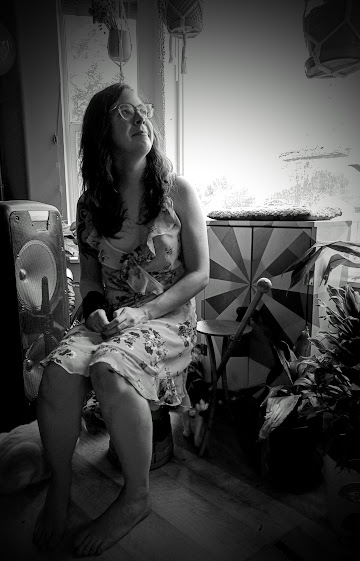
Winter Pool is a gentle 27-year-old non-binary person with a huge heart. They love high fantasy, be it in books, video games, or TV shows. Their long list of likes includes: the “Red Wall” novels, Magic the Gathering, “The Truman Show,” “Eternal Sunshine of the Spotless Mind,” “Rugrats,” “Bob’s Burgers,” “Stranger Things,” and “The Good Place.” They consider “Twin Peaks” their favorite comfort show. “As in rewatching, not comedy,” they clarified. “Even the second season where David Lynch leaves and it gets really weird. There was a chunk of time where I really thought I was going to write and direct movies. When I was young I was always told I could be an astronaut or the president, and I was like—what about a movie director? That should be pretty easy.” They’ve since learned it’s a little more difficult than 19-yr-old Winter thought. In recent months they’ve considered becoming a teacher or a veterinarian. Beachhouse is their all-time favorite band. They highly recommend people check out the album “Once, Twice, Melody.” Their favorite color is orange. Winter recently shared their story with SPP, and it is with great honor that the Prophet is able to feature their narrative as today’s National Coming Out Day post.
I had one of those slow coming outs, where it’s slowly over time. First, you tell one person, and then another person. It depended on where I was. Then, I wasn’t sure who I’d told, and I’d ask, “Do you know?” And they say, “Yeah, I definitely know.” It was over years.
I’ve lived in Provo three different times. I originally came to Provo in 2015 with my biological brother. He wanted someone to move here with him when he went to BYU, and I said, “I can do that. I’m up for change.” I wasn’t going to the Y, just living in BYU housing—the Village and Brownstone—and going to Institute in my free time. It was cheap rent. My brother and I were each other’s anchors, but he was heavy into the Mormon culture, and I could tell it wasn’t for me.
I don’t know that I was even out to myself yet at the time. I was raised with the terminology “gay” and “lesbian,” but I didn’t know there was “trans” and “bisexual.” It was so much more complex, and at the time I was still learning. I knew that I wasn’t straight, but I didn’t realize it was coming more from my gender identity rather than my sexual identity. I feel like I’ve got that straightened out now that I have the support. At the time I knew I was queer and that was it. I thought I was more bisexual because I liked guys as much as I liked girls, but I realize now I’m more on the ace spectrum. So it flipped. My orientation is asexual, but not aromatic. And in romantic relationships I’m into non-binary people. When I meet someone I can usually tell if they’ve got that enby vibe. I like that.
As far as my gender identity, I put it all together when I watched a TV show with a trans character, and I started going down the rabbit hole—“This makes sense!” For a while I thought I was a trans woman. I didn’t know non-binary was a thing, and then I met someone who was enby. That opened up a path. Before I thought I had imposter syndrome identifying as a trans woman, and I realized, no, I’m outside of the binary. I lean much more on the feminine side and I’m comfortable with feminine references, for lack of a better term. At the end of the day I would definitely say I’m nonbinary, and I figured that out about three years ago.
I lived at Brownstone and met N—. She was still going to the Y, and I was going to Institute. I heard a debate going on; something like women getting the priesthood or gay rights.When you’re in Provo on a certain side of a debate you can be isolated because of the culture. I sat down, just to see what was going on while N— was talking to someone. Later, she asked me if I wanted to go for a walk, and we figured out that we were both trans. What are the odds? We became close friends afterwards.
The third time I came to Provo on “vacation” with my biological family, and they didn’t take me back with them. It was the day after the fourth of July in 2018. That Saturday. It’s burned in my head; I won’t forget. I slept in a bit, and they decided to leave me here. I think my biological dad hadn’t wanted me to be living with them for a while. There were a lot of signs there. So I woke up to a missed call and a text, “We’re leaving, and because you didn’t answer.” They left me with $10, a pair of shoes, and a couple of books. I was pretty set. I didn’t know what to do. I tried going back to sleep, because I didn’t want to be awake for this. But I couldn’t; my heart was pounding, I didn’t know what I was going to do. I texted N— and said, “I don’t know if you know anyone, but…” There were people in BYU housing that offered to let me sleep on the couch in the place where I used to live. I felt weird because I remembered when I lived there before, roommates complained when that happened. I didn’t want to be doing that. N— said she knew somewhere that I could stay here while I figured things out. She picked up me and my little backpack, and I moved in with the Pools. We got to be close to each other, and now I live here.
Since then, I still have a hard time going on vacations. I just went to Cedar City to see a couple of plays with a friend and the whole time my brain was “What’s going to happen? What’s going to happen?” I tend to have bad luck with vacations. One time I ended up in a psych ward, another time I ended up going back to Arizona, and there’s this one where I got left. I don’t like fireworks to begin with. I don’t have trauma with loud noises specifically, but I have trauma with unexpected things happening, so when they go off I’m all, “Oh, Jesus!” And then I’m okay. I don’t know what I think is wrong, but my brain thinks there’s something wrong, and then I realize it’s all good. We’re okay.
My home-life prior to coming out was really strict. We couldn’t go outside on Sundays and we couldn’t watch movies above a PG movie until we got Clearplay, where you go through and set it as cut out “fuck” or “shit”. My biological dad would go through and put all the settings on high. I remember The Avengers coming out in theaters. There was a midnight showing and I asked, “Can I please go out and watch with my friends?” They said no. It wasn’t because it was on a school night and I couldn’t be out late; it was because it was PG-13 that I couldn’t see it. It was so embarrassing. I was a junior in high school. I had to tell people it was too late.
I came from a very stereotypical Mormon family. Eight kids. My youngest sibling is seven now, so there’s a twenty-four year difference between all of us. That’s one of the hardest parts of not having ties with my bio family anymore. It’s complicated. I have siblings who are adults that I talk to, and there’s one that I don’t. But the younger ones—I love them so much and I miss them. I have a strong connection with all of them, but I refuse to talk to my biological parents. I haven’t seen any of the little kids since they left me in Provo. I chat with my little brother on Instagram. He and I weren’t very close growing up. I think it’s typical sibling stuff. We were at the age where he would want to join me and come and do what my friends were doing. I always thought he was going to tattletale on me, so I told him he couldn’t hang out with me and my friends. I’m afraid I might have been mean to him in that sense, but now we keep in touch. He’s an active Mormon, but he’s an exception. I think he’s a good example of where Mormonism could go. You know, where it’s not problematic for you to own up to your history of homophobia, transphobia, racism; where you don’t have to strive to be better than others, just accept that others don’t have the same life decisions as you. He’s like, “I make these choices. You make those choices.” He doesn’t need to be mean about any of it, or use our relationship against me. He’s what a truly good Mormon could be.
When I was seventeen, a junior in high school, I was sexually assaulted. The whole school knew about it, and people took sides. The friends of my abuser were the non-Mormon kids, and then there were the Mormons at school. It wasn’t that they didn’t believe me; it was that they like the idea of me repenting for doing a “gay” thing—even though I was assaulted. It went to court, and the trial lasted for several months. My bishop was actually really cool about it. He set me up with a therapist, and said, “You don’t have to tell me anything. I know in worthiness interviews sexual stuff will come up and that’s something we generally talk about, but I want you to know this isn’t about worthiness.” He was how you’d want a bishop to be in that situation, and I really appreciated that.
At school, the Mormon kids saw it more as a repentance story than something they sympathize or empathize with. Cody, my assailant, was a family friend. Almost no one was allowed to sleep at our house, but they let him stay over repeatedly. There was a huge amount of trust given to him. I didn’t tell my parents when he assaulted me, but I was friends with Cody’s older brother. He called and told my mom. He said, “I wasn’t there. I can’t speak to this because it didn’t happen to me, but Cody did this.” Cody was outside on the trampoline playing with kids when the call happened, and my mom didn’t know what to do with it. My parents asked if I wanted to take legal action. I remember not wanting to, but they were concerned Cody might do it again, and they didn’t want it on their conscience. So I reported. If I’d never said anything, high school would have been so much easier. Those last two years were rough. My abuser was sentenced to jail for six months, but he was released after three months and placed on a registered sex offender list for six months to a year. There are different levels of sex offenders. At a certain level, the person stays on the list permanently. For others, it drops off after couple of years unless they repeat abuse, so Cody isn’t a registered sex offender anymore. I found out my older biological brother was still friends with him on Facebook years after the case. I don’t know if my brother believed me, or if he was giving this person a pass to redemption. But I sometimes looked at my abuser’s Facebook page, and every year he would post: “X number of years ago I was sitting in jail” with a frowny face. People would respond, “wow.” So he uses my assault as a point of sympathy. It makes me feel gross.
A few years later, I was trying to come out as trans to some friends who weren’t quite accepting. There were a hundred emotions that came up that seemed to come from a hundred different places, whether it was trauma or concerns about my future. It was all just bubbling up. I was staying with my biological parents, and one night I was like, I’m done. I told my biological mom so she took me to the hospital. I was there for two weeks while we tried to figure stuff out. I joke about it. What I realized was I’m fucked up; I need therapy. But it is a good place for people to tell you that.
I came out to my biological dad while I was in the hospital. When I was assaulted he was a strong advocate for me, and one of the more surprising supporters. He wasn’t known for being supportive of us. He was usually someone who would tell us what was wrong with us, but he was there for me and I was cool with that. The case had been a big thing. I was in between junior and senior years in high school. Everyone at school knew because it went to court. There were people who believed me and people who didn’t. Cody’s mom showed up banging and screaming at our door. It was a couple of intense, shitty years, and my dad had been very supportive. When he found out, he didn’t take me out for ice cream, but he took me to Orange Julius—very cliche. He said, “I’m here for the Blizzard.” He asked if I wanted to talk about it, and I really didn’t know what to say. We’d never done this before and it almost felt like a trap. But when I was in the hospital and came out to them as trans, he took that support back. He asked, “What does that mean about that situation? So you were okay with it?” I don’t think he believes me anymore that I was assaulted. He was misogynist about it, “So you’re a trans woman.” He thought I was assaulted because we were both “guys.” He thought there was no way I’d want that because we were both guys. “So you’re a woman now. So you did lie about it.” He told me that I was the product of Satan’s whisperings. It sounded like something Gordon B. Hinkley would say. That’s some Mormon stuff right there. My nurse was excited to know how it would go, so I told her, and she said, “Sounds like it went pretty bad.” My brain was stuck in the concept of the biological family. I remember thinking, “What do I do to change their minds? I have to do whatever I can to fix this, and try to get us all on a good page.” Since then, I’ve learned that’s not the case. I don’t have to stick with them. My nurse said, “I don’t think you should see them again.” And I thought, “Why? That’s not going to help with rebuilding this bridge with my bio family.” I went back to live with them for eight months to a year. They got me to cut my hair and I was only allowed to wear “guy” clothes. I was back to what I would wear in high school: athletic shorts and a t-shirt. I don’t have any sense of style with guys clothes—not that I do with feminine clothes either. But I have an interest in women’s clothes, where with guys’ clothes I think I don’t care as long as it’s comfortable—loose waist bands and whatnot. In the hospital I had this dream where I’d come out and we’re all cool with it even though they’re Mormon. They’d call me their daughter, since I was identifying as a trans woman. I told my bio mom about that dream, and she said, “Oh yeah, that’s not going to happen. I’m sorry, but that can’t happen.” And I thought, “But I dreamed it!” She said, “No, you can’t do that at home. What would we tell the kids?” I said, “I can tell them if you want. I can handle it for you. I can discuss this.” She said, “It would be uncomfortable.”
In the past four years my involvement in the queer community is mostly with people who need QueerMeals. Most people come for food, social reasons, or a safe space to be rather than being at home or BYU housing. I try to get them what they need, hang out with them, and give them that space. I like taking care of people. I like the idea of helping the sick, and people who need stuff. I like being there for them. I like getting to know people, but I also get really anxious about it—it’s a double edged sword with me. But when a new person comes over and I can say, “Hi! I don’t know you. But do you want water?” I really like that. So I’m glad I have the opportunity to do that here at the Pool’s.
 South Provo Prophet